
New Episodes!
Dharma If You Dare Podcast
What does it take to live a life of meaning and compassion in our busy day-to-day lives? Tune in to get the knowledge and tools you need to help you tackle life’s biggest obstacles joyfully … if you dare! This journey explores shadow integration, spiritual awakening, and karma yoga to help you find balance and the courage to navigate life’s challenges with grace.

About Dharma If You Dare
A Planet Dharma Podcast
Dharma Teachers Doug Duncan and Catherine Pawasarat with to share with you the journey to a life of clarity and bliss. Join them on this podcast of excerpts of their live teachings. They share ancient wisdom updated to speak to the current and evolving paradigm of spiritual awakening in our modern age.
Why Listen to Dharma If You Dare?
Meet the Speakers
Dharma Teachers Qapel (Doug Duncan) and Sensei (Catherine Pawasarat) are spiritual mentors to students internationally and at their retreat center, Clear Sky, in BC, Canada. They are lineage holders in the Namgyal Lineage, both studying under the Venerable Namgyal Rinpoche and other teachers.
Having lived internationally for many years and traveled extensively, Qapel and Sensei draw on intercultural and trans-cultural experience to broaden the range and depth of their understandings of liberation that they share with others.
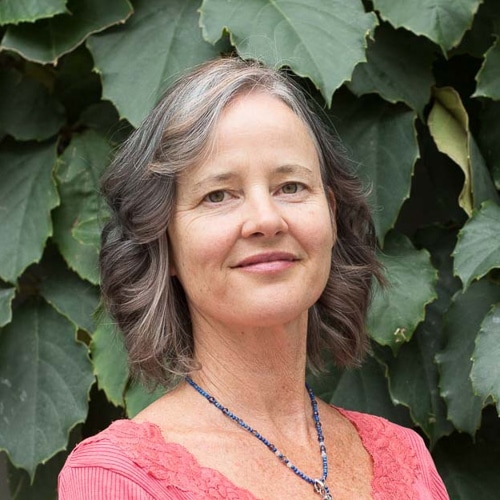
Catherine Sensei
Speaker
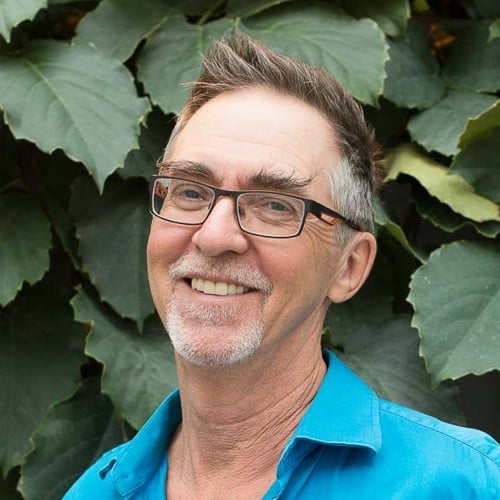
Qapel
Speaker
Dharma if you Dare podcast
Listen Now!
Subscribe to the podcast below on any of your favorite platforms.
BONUS The Still Mind & The Moving Mind
We hope you enjoy today’s soundbite in which Doug Qapel Duncan and Catherine Pawasarat Sensei answer a question about how to stay fully engaged in wholesome and meaningful work without losing contact with the clear light mind of absolute reality.
Catherine Sensei will be leading a breathing retreat at the beautiful Clear Sky Center in May. This is an opportunity for practitioners of any level to deepen their connection to this powerful practice, guided by a world-class teacher, in person or virtually. Sensei will be fresh off her own 3-month personal cabin retreat, jumping back into teaching to lead this retreat on the practices from the Ānāpānasati Sutta, the Mindfulness of Breathing Discourse. You can learn more and register at planetdharma.com/breathing.
Podcast Transcription:
Welcome to this dharma feeder bonus episode. We hope you enjoyed today’s sound bite in which Doug Qapel Duncan and Catherine Pawasarat Sensei answer a question about how to stay fully engaged in wholesome and meaningful work without losing contact with the clear light mind of absolute reality.
Student: So, I just finished about a year and a half living at a zen temple. Now I’m working as a research assistant in a psych lab and I’m kind of back in the world of deadlines and evaluations and all that kind of stuff. And so just kind of wondering how you work with this. It’s a similar question to my last one – I’m doing this evaluation, I want to do well on it, I care about it, I’m pursuing this because I believe it’s a path I can use to help people at the same time, you know, the world of light…How do you, how do you navigate that?
Doug Qapel Duncan: Good question. I think it’s important to realize that there are two kinds of ways to experience the mind. In Mahamudra, it’s called the moving mind and the still mind. When we’re dwelling in emptiness or spaciousness or the light, we’re very much dwelling in the still mind, not letting the arising or eventing of the mind take us away from that still openness. But then the moving mind is absorption- it’s jhāna, and that would move us more into the absorption factor. And so whether you’re absorbed on a rainbow or you’re absorbed on a statue of the Buddha, at work you’re absorbed in whatever particular document or situation you’re involved in and you give it your full attention, you’re full engagement and your full compassion in spite of the struggles of that form.
And then you’re doing jhāna practice or arising yoga – religion is often really focused on more of the arising side and spirituality tends to focus more on the still side, and so you have this metaphor again of the moving mind and the still mind. What do you think, Sensei?
Catherine Pawasarat Sensei: Well, we try our best without attachment, without bringing aversion. And then we acknowledge that the universe is unfolding as it should. It’s challenging, especially in a place like the US, not exclusively the US, but the US is really an over- efforting culture. So if you’re making a good effort but not over-efforting you might be the odd person out. You might want to think of it as being a role model to other people of what a balanced state of mind looks like, and what a balanced life looks like. I used to experience that when we lived in Japan where overwork was really the norm at the time that I was there and I wanted to go traveling. I wanted to explore the world and I would always feel really guilty for taking time off. Then, I changed my view. I thought, Oh no, I’m showing people that there are other options, that we don’t have to work 364 days a year, and that there are other ways of living a life. And that was really helpful for me. I felt like I could share that in a really joyful way with Japanese people and in a way that they experienced this as joyful, too.
Doug Qapel Duncan: A very practical addition to that good advice is: set a clock or set a timer that goes off, you know, like a single beep every 20 minutes or something. And then when that beep goes, you go ‘spaciousness, the light’. And again, as I said, and I think the previous question, watch the transition. To protect yourself when the beep goes, watch your oh, interruption right?
It’s kind of like a shock, almost – there’s the space and then watch the mind again, go back in. And so with that practice, you’ll get very good at going out to the totality, the clear light mind, and back into the absorption – back and forth. And as you get more skilled at it, it’ll become more seamless.
We hope you enjoyed today’s sound bite. Catherine Sensei will be leading a breathing retreat at the beautiful clear sky center in May 2022. This is an opportunity for practitioners of any level to deepen their connection to this powerful practice, guided by a world-class teacher in person or virtually. Sensei will be fresh off her own three-month personal cabin retreat, jumping back into teaching to lead this retreat on the practices from the Annapurna status. Due to the mindfulness of breathing discourse, you can learn more and register at planet timer dot com slash breathing.
The Call, Initiation & Return: Introducing the Divine Mysteries
In today’s episode, Catherine Pawasarat Sensei and Doug Qapel Duncan introduce the topic of the Western Mysteries, or better named, the Divine Mysteries. They outline an overview of the main parts of the spiritual journey: the call, the initiation and the return. They also explore the historical place these traditions have had and some of the ways their influence shows up today.
Today’s recording is content from a previous course by Sensei & Qapel introducing this topic. This summer at Clear Sky Center (and virtually for those unable to travel) they will be leading a retreat on the Tarot & Western Archetypes, a powerful and concise path of liberation that draws on our own life experiences as Westerners and our native intelligence to help unfold deeper wisdom and understanding of our mystical life.
Later, in the fall, Qapel & Sensei will be in Europe to lead an in-person interactive retreat on The Hero’s Journey, a powerful mythical journey experience, integrating Eastern & Western traditions. Accepting the challenge of the Hero’s journey will leave you with a healthier, strengthened ego – one more fully integrated with the ‘shadow’ and thus more energetic and less susceptible to stress.
Learn more about these retreats by visiting planetdharma.com/2022.
BONUS The Power of Goodness
We hope you enjoy today’s soundbite from Catherine Pawasarat Sensei on how goodness is misunderstood and undervalued and how much could be done collectively if we embraced its true power.
Catherine Sensei will be leading a breathing retreat at the beautiful Clear Sky Center in May. This is an opportunity for practitioners of any level to deepen their connection to this powerful practice, guided by a world-class teacher, in person or virtually. Sensei will be fresh off her own 3-month personal cabin retreat, jumping back into teaching to lead this retreat on the practices from the Ānāpānasati Sutta, the Mindfulness of Breathing Discourse. You can learn more and register at planetdharma.com/breathing.
Relationship Implies Two: Becoming Conscious in Love
In this episode, Catherine Pawasarat Sensei and Doug Qapel Duncan explore the dynamics of conscious love in relationships. They dive into how cultural and family conditioning influences how we relate to our romantic and life partners. Examining these patterns highlights how shifting our perspective can lead to more mindful love in relationships. This episode, part of the Conscious Love audio course, discusses practical steps for creating intentional partnerships and cultivating enlightened love. Sensei and Qapel reveal how intimate relationships offer opportunities for awakening through love, transforming unconscious patterns into conscious awareness. Download the full course for free at planetdharma.com/podcastlove to learn how spiritual love connections can deepen your journey toward greater relationship growth and fulfillment.
In today’s episode, Catherine Pawasarat Sensei and Doug Qapel Duncan dive into intimate relationships and explore the skills needed to make a partnership truly work. They look at how our cultural and family conditioning plays out in how we relate to our romantic and life partners. Qapel and Sensei also highlight some ways we can begin to shift our incomplete views about how relationships should be so we can use them to become more conscious truly.
Today’s recording is part of a full audio course called Conscious Love. In the 4-part course, Sensei and Qapel cover a wide variety of topics related to intimate relationships. They explore the conditioning that impacts our relationships and how we experience our partners, including imprinting in the womb and our early experiences with family. And most importantly, they show us how we can use what our relationships show and teach us to wake up. Podcast listeners can download the entire course for free at planetdharma.com/podcastlove.
Welcome to Dharma If You Dare. I’m Christopher Lawley, Planet Dharma team member and producer of the podcast. In today’s episode, Catherine Pawasarat Sensei and Doug Qapel Duncan dive into intimate relationships and explore the skills needed to make a partnership truly work. They look at how our cultural and family conditioning plays out in how we relate to our romantic and life partners. Qapel and Sensei also highlight some ways we can begin to shift our incomplete views about how relationships should be, so we can use them to truly become more conscious. Today’s recording is part of a full audio course called Conscious Love. In the four-part course, Sensei and Qapel cover a wide variety of topics related to intimate relationships. They explore the conditioning that impacts our relationships and how we experience our partners, including imprinting in the womb and our early experiences with family. And most importantly, they show us how we can use what our relationships show and teach us to wake up. Podcast listeners can download the entire course for free at www.planetdharma.com/podcastlove. And now here’s today’s recording:
Qapel: Now relationship implies two. So we have swordsmanship, we have craftsmanship, we have horsemanship.
Catherine Sensei: In horsemanship the other one is the horse!
Qapel: But the ship, it implies skill. The word ship, in this case, implies skill or method and in a relationship, the key is relating. We have not been taught anything about relationship our entire lives. The only study course we did for relationship, was mom and dad, as kids, right? So the only thing I know about women is my mother and the only thing I know about men is my father, in terms of how this thing works in tandem. So all my women…
CS: This is due to the nuclear family that we’ve got now.
Qapel: All my relationships with women are colored and coded, to somehow… around this nucleus thing called my mother whose name was Grace. Right? And then my relationship to how men should be and how men should act and what men are about is this guy named Willis. So I think it’s kind of poetic that my mother was Grace and my father was Will. Maybe it motivated me to get more awake, I don’t know.
CS: So this is a really unnatural situation that we all find ourselves in because relationships are not binary, right? And humans are not binary. And if you’ve ever had the chance to be in a community that’s living, I’m not sure how to put it closer to the land, it’s not like ours is in North America. An entire village looks after the children. They’ve got a lot of different role models for what a male and female are like. Everybody, you know, a kid comes along and everybody older than that kid is kind of the parent at that moment and then the kid keeps going, and then you’re not.
Qapel: Huge.
CS: That’s a much more natural way of being and it’s one that we have to kind of re-create for ourselves as adults because of how our society is now.
Q: Yes. I lived in Inuit communities for years. I was working in the arctic and I was in this one little town with 108 people, mostly Inuit. And I had this Inuit young guy working with me and I said ‘Well where’s your brother?’ Who was, like six. He says ‘I don’t know.’ I said ‘What do you mean, you don’t know?’ He said,’I don’t know, he’s not living at our house.’ I mean 108 people and you don’t know where your brother is? He said ‘Oh I think he’s living with his friend now.’ So this six-year-old kid had decided he just wanted to live in this other house and he just went over and lived in the other house, and the parents of that house added him to their roster and you know, and then this other kid went over here. So the kids were like almost independent adults, and where they chose to live and who they chose to be with, they weren’t tied to this modeling. So as Catherine said, basically the boy, in this case, has 15, 20, 30, 40, 50 different men as models for maleness and the girl has 50, 60 different women as models from different ages for femaleness, right. And so they get this fuller view. Now, so we don’t get that, at least in my experience, but more importantly or equally importantly, is there no course – did you learn how to read? Have you learned how to write? You learned relationships. Was that on the curriculum somewhere? No? How about marriage? Any, like courses on marriage? Like you need a driver’s license to drive a car. You know you have to know how to do it, you gotta know how to fly a plane.
So the two most important things, arguably the two most important things in life: Children and relationships – and there’s no education about it. Maybe it’s changing now. But if it isn’t, there’s fundamentally no academic rating, which means in terms of our society how important is it? Not. And yet as people, we consider these things to be very, very important. But society says it is not important at all because we don’t give any education. Because we’ve got a very strong problem in the West, as the single most important factor in Western civilization is the strong ego, the big man, the big woman, the alphas. And in Asia it’s the group.
CS: Strong ego or weak ego?
Q: Well in the end it’s a weak ego. But you know, individual.
Q: So relationship implies two people: self, the great me and the other, the insignificant her. The great I, and this other thing that’s supposed to be doing what I want her to be doing, right? We get up in the morning, who do we think about? Mostly ourselves. When we go through our day, what are we thinking about? Mostly ourselves. Almost our entire day is spent self-referencing. So when we get to relationship, what are we going to do? Self-reference. Everything’s going to be how it affects me, how it.. whether I like it, whether I don’t like it.. Me, me, me, me, me all day long.
CS: This is important. It’s basically a habit, right? And it’s a really strong habit. Just because I get together with a new partner and it’s amazing and it’s wonderful because I’m falling in love. But that doesn’t mean that all of a sudden I’ve got new habits. Just habits don’t work that way.
Q: So there are two kinds of awareness here. There’s self-awareness, me, and there’s other awareness, you. And how much time do you really think or spend contemplating what the other person’s awareness actually is? Even in relationships you’re mostly thinking about how you’re being affected ,you’re not necessarily thinking very much about what they’re going through or what they’re being affected by what’s going on in their world or what they’re like. You should be interviewing their parents. I want an interview with your parents before I get together with you. And in fact, in India, it’s called arranged marriages and they are relatively more successful because they don’t let you be in charge of it. ‘NO, we’re in charge of you.’ Your parents, your grandparents and everybody else to go, ’You’re not gonna work out well with this guy.’ We’re not preaching arranged marriages, we’re just saying there’s some study or some examination that goes into this process. Other than like, learning to drive a car or something, when it comes to being a human being, meaning me, learning is not what you do unless you intentionally intend to learn who you are as you, which we don’t do. Generally we try to keep it habitual.
CS: So this is especially pronounced today because our societies are so diverse, right? So when we’re talking about ‘we’re bringing our parents’ and the subtext there is also our grandparents and our great grandparents, but we’re bringing really very foreign cultures that don’t necessarily get on well together. Like I knew a woman who was half English and half Italian and I was just like, wow, that must be really, must have been really interesting growing up in that kind of environment. But of course, if you go to the same high school together and you’re both in this case, you know, speaking a common language, you’re not really thinking of that, right. That you’re bringing in Downtown Perugia with sort of rural Herefordshire, right? But that is kind of what, when you really get to know people, at some point you’re sort of like, whoa, I did not know this is what I was getting into, right, and that’s where it’s so important to be able to step into that, because what we’re doing is really kind of an amazing cultural and psychic alchemy. Getting these things to work well together
Q: It’s important to remember you were your mother. I mean you weren’t you with your mother, you were your mother until you were two years of age. And even then cellularly, biologically your mother is with you until you die. Your dad kind of falls out of the picture when he dies. He doesn’t have the same impact, but you were biologically, emotionally, psychologically at every level, mentally, your mother for three years before you ever got to be you. And if you want to awaken. (CS: Before you realised you’re separate from her.) Yeah, and if you want to awaken, you have to make that part of the journey conscious, because it’s that part of the journey that just knocks you into first stage escapism, because it’s not conscious.
CS: That part of the journey you, mean the separation?
Q: Before the separation. From separation to conception – and you can’t do that by study and you can’t do that by courses and you can’t do that by reading books. The only way to do that is to go through it experientially, and the best way to do it experientially is through meditation because the mind can’t reach below two, there is no ego before two, and there’s no way you can think your way through this process you must go through the process, meditation is the way to do it. Call it something else if you like, but it’s fundamentally a meditative journey, and it has to be a conscious meditative journey. You have to do it with intent because otherwise, the ego will just push you back into that cycle. And it’s not hard to do, really. It isn’t really that hard to do. You just have to make that choice rather than running to your addictions or your distractions thinking that they’re important. And they’re important relatively, but they’re not important absolutely. Because absolutely what you’re after is liberation. That’s everything you’re doing, everything you’re seeking. Everything you’re involved in is a mirror to what you’re really after which is this thing called awakening, your liberation, and all the Saints have been telling you this forever And it’s where your contentment lies. It’s where peace lies. Because you’ve transcended the story, you transcended the fable. You transcended the history which now makes you capable of writing your own history, freely.
That’s a huge, huge thing. And it’s not hard, please, please. The Saints have been trying to tell you forever. It’s not hard to awaken. It’s hard to be you. From everybody else’s point of view, we put up with you. I hope this is clear. Your friends put up with you, your partners put up with you because they don’t want to be alone either. We love each other because we’re terrified of being alone. Be awake and then you’ll love everybody and everybody will, well sort of, love you. Except when you tell them, right, what we’re telling you. If you can meet it, just as it is, without dialogue, without commentary, without feeling sorry for yourself or angry or irritated or attached to a view or opinion or whatever: you just see it, let it arise, breathe and be absolutely quiet in the face of it without trying to get rid of it or change it for 90 seconds, it goes through your system in 90 seconds.
And that takes training because the subtlety of the ego to try to get in there and muck around with it is big. And just while we’re on the subject, meditation won’t awaken you either. Meditation won’t awaken you unless you have the intent to use that to become more conscious and aware. And if you do, then it will. When we get in a pair bond relationship, we’re doing basically two things. One is we’re trying to resolve the mother-father dialogue and two, we’re trying to get through the traumas, we’re trying to go through the traumas of separation and we’re using our partner as a mirror.
CS: Or a catalyst. And that’s especially with going back to what you said, that’s especially with that trauma of separation when we realized we were separate from our mother. And it’s terrifying, right? Because we felt so safe and then we feel so unsafe, in that moment. We feel so vulnerable and that’s where the control element comes from: we’re trying to get it safe again.
Q: So when we do this, resolve the mother-father, male-female… Basically the mother-father dialogue is the male-female aspects inside ourselves. We have to integrate the female and the male in ourselves. And when we do that marriage ends and conscious relationship begins.
Christopher: We hope you enjoyed this episode. Please rate and review Dharma If You Dare on your favorite podcast app to help more people find and benefit from these teachings and don’t forget to subscribe to get episodes and bonus content sent directly to your device. Today’s recording is content from Sensei and Qapel’s audio course, Conscious Love. The course explores many aspects of intimate relationships, including the unconscious patterning that influences them and how to turn partnerships into opportunities for deep transformation. Podcast listeners can download the entire course for free at planetdharma.com/podcastlove
See you next time and may all our efforts benefit all beings.
BONUS Attending to Tasks While Remembering The Light
We hope you enjoy today’s soundbite from Doug ‘Qapel’ Duncan and Catherine Pawasarat Sensei as they give advice to a student about how to train the mind to be attentive to the details in their relative, day-to-day reality without losing contact with the absolute truth that everything is light and empty of inherent existence.
If you are looking to incorporate more activities into your life to support contemplation and introspection, we recommend our weekly reflection series called ‘52 Reflections’. Sign up for free and once a week you’ll receive a short passage and follow-up prompt that you can use to frame your day, your week or a meditation session. You can learn more and sign up for free by visiting planetdharma.com/52reflections.
The Clear Light of the Mind: Exploring the Ephemeral Nature of Reality
In today’s episode, Doug Qapel Duncan and Catherine Pawasarat Sensei explore the topic of The Clear Light of the Mind. They outline how our sense of reality is formed, including how early stimulation and imprinting create a sense of solidity in ourselves and our environment. They explore how we can use dreams as a way of understanding the ephemeral nature of our experience. They look at how traditional Buddhist practices help us to reconnect with the essential light nature of the universe.
Looking to engage with cutting-edge 21st-century dharma in a way that’s right for you? Each year, Planet Dharma offers a variety of programs and retreats to catalyze awakening for spiritual seekers. Over the course of this year, in addition to the Tarot retreat, Planet Dharma will be offering a variety of in-person and online retreats of various lengths. These offerings will be complemented by online courses and Enlighten Up dharma talks. There is also a dharma trip to the Baltics being planned for the fall. To learn more about these events and to see the diversity of material being offered, visit planetdharma.com/2022.
Podcast Transcription:
Welcome to Dharma If you Dare. I’m Christopher Lawley, Planet Dharma team member and producer of the podcast. In today’s episode, Doug Qapel Duncan and Catherine Pawasarat Sensei explore the topic of the clear light of the mind. They outline how our sense of reality is formed, including how early stimulation and imprinting creates our sense of solidity of ourselves and our environment. They explore how we can use dreams as a way of understanding the ephemeral nature of our experience and they look at how traditional Buddhist practices help us reconnect with the essential light nature of the universe. Theoretical understanding and food for thought are helpful inputs as we go about our daily life. But for deep spiritual change and liberation from suffering, we need to engage in depth work. In this tradition that manifests as retreat work and personal engagement with qualified spiritual guides. As engaging, practical, and empowering as these talks are – as a student of Qapel and Sensei, I can attest to the fact that working with them in person is where the transformation really happens. They are incredibly skilled at meeting modern seekers where they are and giving personalized guidance, direction and practices that integrate the teachings into actual manifestation in the world. If you’re looking to actually transform your life and awaken in this lifetime, I encourage you to check out www.planetdharma.com to find your best way to connect and move that dream closer to reality. And now here’s today’s recording.
Catherine Sensei: Today, we’re going to talk about the Clear Light mind. The mind is made of light. In fact everything is made of light. So it makes it easy for us to feel light about our life. Levity, joy… And we’ll explain how this works.
Qapel: Because it’s made of light of course, we can miss it. You can’t really see light, you only see its refractions. So that’s going to be a part of what we talk about. Because the light is invisible we can overlook it.
CS: And part of the spiritual path is learning how to not overlook it and how to embrace it and how to use it for our awakening. Right? It’s called enlightenment for a reason, it’s very much about light and bringing light to darkness and alleviating suffering for the benefit of all beings.
Q: And this is what we’re going to kind of talk about in terms of how to use that, how it works. And of course, in terms of Buddhist philosophy, Clear Light mind is also called Shunyata, or Emptiness because of course light appears to be empty. So the nature of the mind is also the nature of light, therefore also the nature of Emptiness.
CS: It also manifests as a kind of spaciousness.
Q: Since it doesn’t occupy any space it’s also called empty. So these are just ways to look at it from various perspectives, but let’s go back to the very beginning from when we were born or even conceived. And from that point forward we’re thrown into objects.
CS: First, we’re thrown into the womb. Being born into a body, or for consciousness to take on a body is quite a process. The consciousness and the body are very different ways of manifesting and take some getting used to.
Q: So it’s not surprising that our entire life is occupied with form, with objects and how to live in it. And even before language, learning to talk and independent motion, learning to walk – there are a couple of years spent with the basics in terms of how the senses work, how the body works, learning to move your hands and your eyes, and all that. And in the process of that we learned to call that ‘me’, we learned to call that ’I’, we learned to call everything ‘mine’ that affects us.
CS: Later we graduate to learning how to interact with other people and other forms.
Q: First through our bodies in terms of Mum and the family and then through our feelings in terms of whether we like something or don’t like something.
CS: Communicating and processing, processing our interactions with others, processing our interactions with forms that manifest externally, and processing our feelings and our thoughts, our various arisings.
Q: So like anything in form, it models itself on something. So if an acorn is going to look like an oak, so granted that our mom and dad were our oak trees and we’re the acorns, it’s not surprising that we’ve modeled our whole relationship to form and structure and feelings of thought initially around our conditioning and our parental structure.
CS: Even if we think we don’t want to, even if we reject how our parents related to other forms, we are imprinted by them. So we really have, in a sense, not much choice other than to manifest similar to the ways that they did and do.
Q: That’s right. And by the time we’re old enough to rebel, which is you know 13 through 75! By the time we’re old enough to rebel and think about it, it’s kind of too late in a way because the real building blocks are there. Now we can modulate or moderate the particular forms or structures about how we go things we can change, our gender orientation.
CS: We can adapt
Q: We can change our diet. But the groundwork of the thing is in the causes – is there and present.
CS: If you were born in Canada you’re pretty likely to manifest similar to a Canadian. You’re born in the UK it’s pretty likely you’ll manifest like a UK person.
Q: And if you’re born in space you’ll manifest like a space being which most people who look at the spiritual life figure that anybody who is involved in the spiritual life is a bit of a space cadet.
CS: Again we can do things to moderate this, right. You may move to another country or you may decide you don’t want to be like your parents and make efforts to manifest differently. But that imprint is still there.
Q: So this kind of material build-up makes everything seem quite solid. And so this sense of self is built around the sense of solidity. It’s clear that things are objects, both thoughts, feelings, and ideas – we call them objects. And these objects have relationships to each other. We call them relationships in the human sense, but also concepts and ideas. Success also is a form of a concept. It’s a structure.
CS: Relationship. When we talk about objects, and a relationship is an object, it’s partly a concept. For example, love is an object, it’s the concept that we have of love.
Q: So the most ephemeral of all our objects, of course, are our thoughts – because they’re mental constructs, and then feelings are a little less ephemeral. And by the time we get to the body, it seems very solid.
CS: Thoughts we call mental objects.
Q: But all of it is ephemeral. It seems solid but fundamentally it’s ephemeral. And perhaps the easiest access to this is our sense of our dreams. Our dreams seem very ephemeral but they’re made again of objects. They’re made of visual and emotional and mental objects that we see in the dream world. But as you know in dream there is no object. There is no inherent object, that’s an arising, independent of you often. Although there are connections. So this idea that dreams are also made of light.
CS: Dreams is a great example of that because of course dreams happen usually in the dark usually at nighttime, usually, our eyes are closed. So it’s dark in that sense too and yet they can seem so vivid, right? They can seem so colorful. They can seem so full of light. So that’s a good example of how mental objects are made of light.
Q: So from a Buddhist perspective, everything is made of light, therefore everything is ephemeral. The degree of solidity is based on a law called the ‘Principle of Relative Densities,’ to relative densities of things meeting: when you clap your hands, they in fact don’t actually ever touch. What you’re experiencing is the sound wave of the breaking of the molecules of the air that make them seem like they touch. So Buddhism and quantum physics are beginning to see things quite similarly in the sense that there is no inherent object to be found. And if there’s no inherent objection to be found and I am identified with all the objects I think that are inherent, then there’s no need to be found inherently. So in this sense, you should maybe imagine a rainbow.
CS: It looks like an object and yet we can pass through it.
Q: A child may go chasing it. ‘Oh, let me go chase the rainbow’. And if you’ve ever driven through a rainbow, of course, you recognize it disappears before you get to it and it’s not there when you’re in it and when you come out of it, it’s behind you. So this rainbow refracted light reflects on what the mind is doing with apparently solid objects. The mind is turning things into solidity by the tendency of the density of the light to move from the gaseous elements all the way down to the heavy metals like iron and lead, but again iron, lead, they are condensed light.
CS: You can think of the mind as a prism that the light passes through. So when light passes through a prism it bends and it manifests in different ways on the other side and the mind has a similar function.
Q: So the exercise that you might think about is thinking about your life and everything – all the objects in it as, kind of rainbow light and that prism is the nature of your mind itself. So if you go the other direction from the refracted light through the prism you get to the clear light. And the clear light is invisible, it’s intangible. You can’t really point to it and say ‘There it is’. There’s no way to identify it as a thing in and of itself, other than with the word light. And so the sense of ‘I’ or ‘me’ is the same. The ‘I’ and ‘me’ only appear on the colored side of the prism. When you bring the light back through the prism to where it becomes clear, the ‘I’ itself evaporates. Yet still exists when it goes through prism.
CS: Right as we like to say, we’re not saying that the ‘I’ doesn’t exist. We’re saying that it doesn’t exist the way that we think it does.
Q: The light is invisible. So the light of the mind is invisible. But as Sensei says, that does not mean nonexistent. The Clear Light Mind is obviously spacious, as it occupies no space. It’s inherently not an object, since it holds no form. It is radiant and luminescent. Because what happens after it goes through the prism? Look what the light did! So we say it’s radiant and you can see it in the dark. Even in the dark the mind is one of light.
CS: Because the mind is made of light, there’s no inherent reason that we need to be caught up in any sort of struggle. So, imagine struggling with light, imagine clinging to light. Or having an aversion toward the light or loving the light.
Q: “ I’m in love with the light, I hate the light”. These are all on the other side of the mirror. On the other side of the prims. That gets us caught up because we forget that the nature of the mind is spacious, clear, radiant, blissful. And because of that inherently compassionate.
CS: Light, the opposite of heavy.
Q: You can also think of the mind as a mirror.
The mind reflects whatever is put in front of it. So, if you put a dog in front of your mind, you see a dog, If you put a horse in front of your mind, you see a horse. But the argument from the 5th Patriarch or the applicant to be the 6th Patriarch said, “Your mind is like a mirror, polish bright so no dust can alight”. That’s very good teaching that talks about clinging and aversion and not doing that. But there was a teaching a little bit further on which was from the future 6th Patriarch of Zen, or Chan, in China, who said basically “Where there’s no mirror, where can the dust alight?” So since you are as empty as the empty mirror or the empty prism, all suffering is built and constructed by your sense of solidity.
CS: So our lives are one kind of prism for this light to pass through. So there’s a certain amount of allowing the light to pass through, as it naturally does. And there’s a certain amount of… we get to help determine how that light passes through, how that light is going to manifest in our lives in terms of relationships and career and work and spiritual practice.
Q: So what we put in front of the mirror is karma. You think, well, I’m not choosing what appears in front of my mind, but in fact we are, it’s based on previous karma and present supporting circumstances. So when we talk about freeing ourselves from karma or liberating karma, we’re really liberating ourselves about the confusion, about the nature of the condensed light that we cling to and adhere to because fundamentally of course at death, you’re going to return to where you came from, which is the light. And if you have that sense of the light while you’re living, then death becomes a very subtle transition phase rather than a shocking transition phase.
*****
Q: So the entire Buddhist path is a journey from confusion about the nature of solidity, its objects, attachments, and aversion, karma – back to our recognition of the inherent Clear Light Mind that’s sitting there even as we speak.
CS: Our conditioning in a sense, we could say that it has trained us to believe that rainbows are permanent and we try to grab onto them and hold them and shape them how we’d like to, rather than perceiving them as light and enjoying them for being what they are.
Q: So, all our spiritual practices work it backwards. So from the Light Mind of Dzogchen and Mahamudra – Clear Light Mind is another word for Dzogchen and Mahamudra. But the earlier stages of the path, of spiritual path, worked with the senses so that they work with the solidity of the senses and the solidity of the feelings and the solidity of the mental objects. And they introduce practices to help you transit from a belief in the solidity of things to a better understanding of the radiance or the rainbow-like quality of the appearances. And that’s called Tantric practice or Deity practice. In the middle stages of the path they focus more on the understanding of compassion and loving kindness that recognizes our relationship to these apparent solid arisings, the objects etcetera requires a rethinking of the view. So that’s Mahayana. Mahayana is very much about deconstructing our belief in the solidity and the reality, the inherent reality of things. Until we arrive at the apex which is Mahamudra or Dzogchen. Dzogchen meaning ‘Great Perfection’ basically. Great completedness or the great wholeness or in brief an ongoing unitiveness or wholeness; and awareness of this in Dzogchen and is called Rigpa, the naked awareness.
CS: All of our struggles and worries and dissatisfaction really arise from us trying to relate to the light as though it were a permanent object. When we keep in mind, in the light of the mind, that they’re impermanent, that all objects are made of light, our struggles, and our dissatisfaction and our worries magically dissipate.
Q: So the aim of something like Dzogchen is to recognize the ground of being is Sunyata: empty, luminous, radiant, natural and ultimately good, rooted in compassion and loving-kindness. This is the essence of it and in Dzogchen practice there are two principal methods to do that. One is called Trekcho and the other is called Togal, which means respectively cutting through and leap over, crossing over.
CS: Our work as spiritual practitioners is to realize this clear light of the mind. All the spiritual methodologies are designed to help us do this and then to manifest it, to manifest this clear light of mind through the prism of our lives or the prism of objects, loving-kindness and compassion.
Q: So you’re either on one side of the prism and kind of a little bit in prison or you’re on the other side of the prism, which means you’re in the clear light mind and free. And the dialogue being able to go back and forth between those relationships is called ‘skill and means’ or (?)a priori method. That’s what this spiritual teaching is focused on helping you realize.
CS: That’s right. Some teachings say that compassion is one hand and skill and means is the other and that we need both.
Q: So heart’s desire, true nature of mind is yours for the taking if we can put it that way. So just have to be like Alice in wonderland and go through that rabbit hole of the prism and see what is there in the natural emptiness of the clear light mind. The metaphors of the prism or the mirror are ways to help the student or the aspiring practitioner to get a better look at how that works and manifests. And so where it gets thick and difficult is when we get into taking objects to be real, then we form relationships around them that are based on greed and trying to get, attachment, or aversion – pushing them away.
CS: Based on hatred – I don’t want this.
Q: Or confusion – the idea that they’re actually inherently real.
CS: Well, we could go on right, the more permanent that we think objects are, the more we try to grab them being attached to them based on greed, or the more we try to push them away, which is a form of aversion based on hatred or ill will and when we realize that all objects are made of light, that it’s impossible to be attached to them or to push them away, then we allow things to arise and pass away naturally as they do – as thoughts do in the mind. And again, the suffering, any suffering we’re experiencing subsides of its own nature.
Q: So, for instance, when you’re doing the Anapanasati meditation, the meditation on the breath, the rise and fall – [CS: Awareness of the breath] when it turns to the inside it becomes awareness arising. One of the companion meditations in that practice is a meditation on the light.
And so they suggest that you meditate on how the light falls on things. So dappled leaves or the shades of green. So rather than getting involved in green as the color, which would be more ‘object dense’, you see the reflected nature of the light and this meditation on the light is very much a companion piece to the meditation on the breath. Which the Buddha supposedly awakened on: meditation on the rise and fall of the breath and the nature of the light. The question we’d like you to reflect on is, what is the nature of your experience of the light? But not so much from the point of view of some highfalutin meditation experience you had once, or yesterday, but more a case of how you reflect on that, day to day. In your movement through your world do you spend any time thinking about the other side of the prism? And if you don’t, can you think of ways that you might help yourself to contemplate the other side of the prism?
CS: Objects as light.
Q: Which is one of the reasons awakening is called ‘Crossing over to the Other Shore’, basically the idea of crossing a river. So if you consider the river here, in this case, to be a prism, we’re asking you to cross from the solidity side of the prism, across the river of the prism into the light side and spaciousness.
Host: We hope you enjoyed this episode. Please rate and review Dharma if you Dare on your favorite podcast app to help more people find and benefit from these teachings. And don’t forget to subscribe to get episodes and bonus content sent directly to your device. Looking to engage with cutting-edge 21st-century dharma in a way that’s right for you? Each year, Planet Dharma offers a variety of programs and retreats to catalyze awakening for spiritual seekers.
Planet Dharma will be offering a variety of in-person and online retreats of various lengths. These offerings will be complemented by online courses and Enlighten Up dharma talks. There’s also a dharma trip to the Baltics being planned for the fall, to learn more about these events and to see the diversity of material being offered, visit www.planetdharma.com/2022. See you next time and may all our efforts benefit all beings.
YouTube Video Transcript:
Today we’re going to talk about the clear light mind, well the mind is made of light. Everything is made of light so it makes it easy for us to feel light about our life, levity, and joy and we’ll explain how this works. Because this is made of light, of course, we can miss it, we can’t really see light, you only see its retractions. Because light’s invisible we can overlook it. And part of the spiritual path is learning how to not overlook it how to embrace it and how to use it for our awakening. It’s called enlightenment for a reason. It’s very much about light and bringing light to darkness and alleviating suffering for the benefit of all beings. And this is what we’re going to kind of talk about in terms of how to use that, how it works. And of course, in terms of Buddhist philosophy, a clear light mind is also called Shunyata or emptiness because, of course, light appears to be empty. So the nature of the mind is also the nature of light therefore also the nature of emptiness. It also manifests as a kind of spaciousness as well. Since it doesn’t occupy any space it’s also called empty. So these are just ways to look at it from various perspectives. But let’s go back to the very beginning. From when we’re born or even conceived and from that point forward we’re drawn into objects. First, we’re thrown into the womb. Being born into a body or for consciousness to take on a body is quite a process, right? The consciousness in the body are very different ways of manifesting and takes some getting used to. So it’s not surprising that our entire life is occupied with form, with objects and how to live in it. Even before language learning to talk and independent motion, learning to walk, there are a couple of years spent with the basics in terms of how the senses work, how the body works, learning to move your hands, your eyes, and all that. And in the process of that we call that, we learn to call that me. We learn to call that I. We learn to call everything mine that affects us. Later we graduate to learning how to interact with other people and other forms. First through our bodies in terms of the mum and the family and then through our feelings in terms of whether we like something or don’t like something. Communicating. And eventually.
And processing.
Processing our interactions with others. Processing our interactions with forms that manifest externally. And processing our feelings and our thoughts are various horizons. So like anything, the informant models itself on something. So an acorn is going to look like an oak. So granted that our mum and dad were our oak trees and grew the acorn. It’s not surprising that we’ve modeled our whole relationship to form and structure and feelings of thought, usually around our conditioning and our parental structure. Even if we think we don’t want to, even if we reject how our parents relate to other forms, we are imprinted by them. So we have, in a sense, not much choice other than to manifest. Similar to the ways that they did and do. That’s great. And by the time we’re old enough to rebel, which is, you know, 13 through 75. By the time we’re old enough to rebel and think about it, it’s just kind of too late in a way because the real building blocks are there. Now we can we can modulate or moderate the particular forms or structures of how we do things. We can change our gender orientation. We can adapt.
We can change our diet, but the groundwork of the thing is in the causes. Is there a present?
If you were born in Canada, you’re pretty likely to manifest similarly to a Canadian.
If you’re born in the UK, you’ll likely manifest like a UK person.
If you’re born in space, you’ll manifest like a space being, which most people who like the spiritual life figure that anybody who’s involved in the spiritual life is a bit of a space to that. Again, we can do things to moderate this, right? You may move to another country or you may decide you don’t want to be like your parents and make efforts to manifest differently,but that imprint is still there. So this kind of material buildup makes everything seem quite solid, and so this sense of self is built around the sense of solidity.
It’s clear that things are objects, both thoughts, feelings, and ideas, we call them objects, and these objects have relationships to each other. We call them relationships in the human sense, but also concepts and ideas. Success also is a form of concept and structure.
Relationship, when we talk about objects and relationship is an object, it’s partly a concept, right? For example, love is an object. It’s the concept that we have of love.
So the most ephemeral of all our objects, of course, are our thoughts because they’re mental constructs, and then feelings are a little less ephemeral, and by the time we get to the body, it seems very solid. And these thoughts we call mental objects. But all of it is ephemeral.
It seems solid, but fundamentally it’s ephemeral, and perhaps the easiest access to this is our sense of our dreams. Our dreams seem very ephemeral, but they’re made again of objects. They’re made of visual emotional and mental objects that we see in the dream world, but as you know, in a dream, there is no object. There is no inherent object that’s arising independent of you, often, although there are connections. So this idea that dreams are also made of light.
Dreams are a great example of that because, of course, dreams happen usually in the dark, usually at nighttime. Usually, our eyes are closed, so it’s dark in that sense too. And yet, they can seem so vivid, right? They can seem so colorful. They can seem so full of light.
So that’s a good example of how mental objects are made of light.
So from a Buddhist perspective, everything’s made of light. Therefore, everything is ephemeral. The degree of solidity is based on a law called the principle relative densities, the two relative densities of things meeting. When you clap your hands, they don’t ever touch. What you’re experiencing is the sound wave of the breaking of the molecules of the air that make them seem like they touch. So Buddhism and quantum physics are beginning to see things quite similarly in the sense that there is no inherent object to be found. And if there’s no inherent object to be found, and I am identified with all the objects I think are inherent, then there’s no need to be found inherently. So in this sense, you should maybe imagine a rainbow.
It looks like an object, and yet we can pass through it. A child may go chasing it. Oh, let me go chase the rainbow. And if you’ve ever driven through a rainbow, first you recognize it disappears before you get to it, and it’s not there when you’re in it, and when you come out of it, it’s behind you. So this rainbow-refracted light reflects on what the mind is doing, this solid object. The mind is turning things into solidity by the tendency of the density of the light to move from the gaseous elements down to the heavy metals, like iron and lead. But again, iron lead, they are condensed light.
You can think of the mind as a prism that the light passes through. So when light passes through a prism, it bends and it manifests in different ways on the other side, and the mind has a similar function. So the exercise that you might think about is think about it, think about your life, and everything, all the objects in it, has a kind of rainbow light, and that your prism is the nature of your mind itself. So if you go the other direction from the refractive light through the prism, you get to the clear light, and the clear light is invisible. It’s intangible. You can’t point to it and say, there it is. There’s no way to identify it as a thing in and of itself, other than with the word light. And so the sense of eye or me is the same. The eye and me only appear on the colored side of the prism, and when you bring the light back through the prism to clear the eye itself evaporates, yet still exists when it goes through the prism.
Right. As we like to say, we’re not saying that the eye doesn’t exist, we’re saying that it doesn’t exist the way that we think it does. The light is invisible, so the light in the mind is invisible, but that doesn’t, as Sensei says, that does not mean non-existent. The clear light mind is obviously spacious, as it occupies no space. It’s inherently not an object since it holds no form. It is radiant and luminescent, because what happens after it goes through the prism. But what the light did, so we say it’s radiant and luminescent, and you can see it in the dark.
Even in the dark, the mind is a one of light. Because the mind is made of light, there’s no inherent reason that we need to be caught up in any sort of struggle. So imagine struggling with light.
We imagine clinging to light. We’re having aversion towards light. We’re loving the light. I’m in love with the light. I hate the light. These are all other side of the mirror, other side of the prism that gets us caught up because we forget the nature of the mind is spacious, clear radiant, blissful, and because of that, inherently compassionate.
It’s light, the opposite of heavy. You can also think of the mind as a mirror. The mind reflects whatever is put in front of it.
So if you put a dog in front of your mind, you’ll see a dog. If you put a horse in front of your mind, you’ll see a lot. But the argument from the fifth patriarch, the applicant to be the sixth patriarch said, your mind is like a mirror, polished bright, so no dust can elate. That’s a very good teaching that talks about clinging and aversion and not doing it. But there was a kind of one’s teaching a little bit farther on, which was from the future sixth patriarch of Zen, or Chan in China. We said basically where there’s no mirror, where it can lead us to light. So since you are as empty as the empty mirror or the empty prism, all suffering is built and constructed by your sense of solitude. So our lives are one kind of prism for this light to pass through. So there’s a certain amount of allowing the light to pass through as it naturally does.
And there’s a certain amount of we get to help determine how that light passes through, how that light is going to manifest in our lives in terms of
relationships and career and work and spiritual practice.
So what we put in front of the mirror is karma. What you think, well, I’m not choosing what appears in front of my mind, but in fact, we are. It’s based on previous karma and present supporting circumstances. So when we talk about screen ourselves from karma or liberating karma, we’re really liberating ourselves about the confusion, about the nature of the condensed light that we cling to and we adhere to. Because fundamentally, of course, at death, you’re going to return to where you came from, which is the light. And if you have that sense of the light while you’re living, then death becomes a very subtle transition phase rather than a shocking transition phase. The entire
Buddhist path is a journey from confusion about the nature of solidity. It’s Audrey’s attachments in aversion, karma. To back to or recognition of the inherent clear light mind that’s sitting there even as we speak. Our conditioning in a sense, we could say that it is trained us to believe that rainbows are permanent and we try to grab onto them and hold them and shape them how we’d like to rather than perceiving them as light and enjoying them for being what they are.
So all our spiritual practices work at backwards. So from the light mind of Zagchen and Mahamudra, clear light mind is another word for Zagchen or Mahamudra. But the earlier stages of the path of spiritual path work with the senses so that they work with the solidity of the senses and the solidity of the feeling and the solidity of the mental objects and they introduce practices to help you transit from a belief in the solidity of things to a better understanding of the radiance or the rainbow-like quality of the appearances. And that’s called tantric practice or deity practice. Antiness of those things.
In the middle stages of the path, we focus more on the understanding of compassion and loving kindness that recognizes our relationship to these apparent solid arising their objects etc.
Requires a rethinking of the view. So that’s Mahayana, the Mahayana is very much about deconstructing our belief in the solidity and the reality inherent reality of things.
Until we arrive at the apex which is Mahamudra or Zagchen. Zagchen meaning great perfection basically. Great completeness or the great wholeness or in brief and ongoing unitiveness or wholeness and the awareness of this in Zagchen is called grandpa and naked awareness
All our struggles and worries and dissatisfaction really arise from us trying to relate to the light as though it were a permanent object.
When we keep in mind in the light of the mind that they’re impermanent that all objects are made of light are struggles and are dissatisfaction and our worries magically dissipate.
So the aim of something like Zagchen is to recognize the ground of being the Shrinita, empty, luminous, natureal, ultimately good, very good in compassion and loving kindness.
This is the essence of it and in Zagchen practice there are two principle methods to do that. One is called trechtio and the other is called togal which means respectively cutting through and leap over, crossing over. Our work as spiritual practitioners is to realize this queer light of mind.
All the spiritual methodologies are designed to help us do this and then to manifest it to manifest this queer light of mind through the prism of our lives or the prism of objects, loving kindness and compassion.
So you’re either on one side of the prism and kind of a little bit in prison or you’re on the other side of the prism which means you’re in the queer light mind and free. And the dialogue being able to go back and forth between those relationships is called skill and means or opire method. That’s what the spiritual teaching is focused on helping you realize. Some teachings say that compassion is one hand and skill and means is the other and that we need both. So, heart’s desire, true nature of mind is the yours for the taking if we can put it that way. And so you just have to be like Alice in Wonderland and go through that rabbit hole of the prism and see what is there a natural, natural emptiness of a queer light mind.
The metaphors of the prism or the mere are ways to help the student or the the aspirin practitioner to get a better look at how that works and manifests. And so where the where it gets thick and difficult is when we get into taking objects to be real, then we form relationships around them that are based on greed and trying to get attachment or a version. Or a version pushing them away.
I used to make sure that I don’t want this. Yeah, or confusion, the idea that they’re actually inherently real. And I think that’s anything you want to add?
No, I think well, we could go on, right? We could. The more permanent that we think objects are, the more we try to grab them, being attached to them, they seem greed, or the more we try to push them away, which is a form of a version based in hatred or ill will. And when we realize that all objects are made of light, that it’s impossible to be attached to them or to push them away, then we allow things to arise and pass away naturally as they do, as thoughts do in the mind.
And again, the suffering, any suffering we’re experiencing sub-sides of its own nature. So for instance, when you’re doing the anaphanasadi meditation, the meditation on the breath, the rise and fall, awareness of the breath. When it turns to inside, it becomes awareness of rising, fall. One of the meditations is companion meditations. In that practice, is meditation on the light. And so they suggest that you meditate on how the light falls on things. So dappled leaves are the shades of green. So rather than getting involved in green, as the color, which would be more object dense, you see the reflected nature of the light. And this meditation on the light is very much a companion piece to the meditation on the breath, which the Buddha supposedly awakened on meditation on the rise and fall of the breath and the nature of the light.
The question we’d like to reflect on is like, what is the nature of your experience of the light?
But not so much from the point of view of some high-falutin meditation experience you had once or yesterday. But more a case of how you reflect on that day-to-day in your movement through your world. Do you spend any time thinking about the other side of the prism? And if you don’t, then you think of ways that you might help yourself to contemplate the other side of the prism.
Hi. Can you hear me? We can. Can you hear me very well? Great. My question is about, yeah, that issue with seeing the solidity of objects like like my training has been being proactive and seeing that needs to be done kind of that capricornian idea and it’s very kind of materially orientated yet kind of with the spiritual big pictures like oh, seeing like oh, things are light and empty. So how do I kind of reconcile those two things? Oh, such a great question, Richard. Good question. So this is the big challenge for every spiritual practitioner is to be living simultaneously in the world of relative truth, which is the world of objects and in the world of absolute truth, which is the world of light, spaciousness of emptiness of shunyata and using one, leveraging one to support the other.
Now when we’re in the relative world, for example, Richard’s talking about his Dharma training, he lives here at Clear Sky and just like everywhere else and everyone else, it takes a certain amount of activity to run a retreat center like Clear Sky. And because we’re spiritual practitioners, especially because it’s a retreat center, we’re also trying to dwell in emptiness and spaciousness and light all of the time. I think this is where spiritual practitioners get a little bit of a stereotype like someone’s, you know, a police officer pulls you over first feeding and asks for your driver’s license and you go, oh, I’m one with the universe, right? He’s just going to give you a more expensive ticket if you do that. However, we can draw on our sense of spaciousness to not get stressed out if we get pulled over for a speeding ticket and treat the traffic police person with loving kindness and compassion and staying in a good state regardless of the outcome.
And special bonus is it will probably be a better outcome no matter how you look at it.
If we draw on our sense of emptiness to relate in the relative world.
Sensei is talking from personal experience with traffic. For example, someone you know gets pulled over. So I mentioned another take on the same question. I think maybe the easiest way to meet that relative truth, absolute truth that Sensei was referring to is respect. And it’s really a respect for the integrity and the totality of the moment you’re in. So if I am lifting my glass of water, I try to do it as mindfully as possible. Try to stay with the motion from beginning to end and importantly in the transition. So from when I’m reaching for the glass back to the dialogue back. So transitions in the material world are a really great way of seeing the bending of the light and how the light shifts to move. So this is why Zen Monastery is you sweep the floor, you polish the brass, you know, you clean the lights and you do it every day in spite of the fact that it’s spotless. It isn’t about the actual action you’re involved in. It’s about the mindfulness that you bring to it. And then you watch the horizons that happen whether you’re bored or restless or irritated or happy through that action and you try to see those horizons as also empty in the light. So it’s a kind of respect for your own life and energy to be with where you are and what you’re doing in the moment because it’s the only life you have is in the moment. That’s the only life you ever get. And so the more you can respect that moment and see the emptiness and act with integrity in relationship to the object, the tool, the mind, the feelings, the thoughts.
Then the clear light mind is more obviously there in the radiance of your experience and the radiance of how you meet it. And this is contagious.
BONUS The Wisdom of Hua Yan
We hope you enjoy today’s soundbite from Doug ‘Qapel’ Duncan and Catherine Pawasarat Sensei as they introduce the 3 principles of Hua Yan Buddhist philosophy in preparation for their upcoming meditation retreat.
You can learn more about the retreat at planetdharma.com/huayan.
If you are looking to incorporate more activities into your life to support contemplation and introspection, we recommend our weekly reflection series called ‘52 Reflections’. Sign up for free and once a week you’ll receive a short passage and follow-up prompt that you can use to frame your day, your week, or a meditation session. You can learn more and sign up for free by visiting planetdharma.com/52reflections.
The Tarot: Introducing the Major Arcana
In today’s episode Doug Qapel Duncan gives an overview of the major arcana from the Tarot. He goes over all 22 of the cards from the Fool to the World, giving pithy summary statements about each one and brief comments on how you can use or work with them.
The mandate of Planet Dharma is to help people awaken in this lifetime. In this recording you get a sense of this, both via the urgency of making every aspect of our experience conscious, and the framing of these 22 archetypes as an integrated path of spiritual awakening rather than simply a divination tool.
If you are interested in doing a deep dive into the Tarot, Planet Dharma is running a retreat called Tarot & Western Archetypes this summer. The retreat will take place at the beautiful Clear Sky Center in the British Columbia Rockies. There will also be the option to join virtually for those who are unable to travel. You can visit planetdharma.com/tarot for more information.
Podcast Transcription:
Host: Welcome to Dharma if you Dare, I’m Christopher Lawley, Planet Dharma team member, and producer of the podcast. In today’s episode Doug Qapel Duncan gives an overview of the major arcana from the Tarot. He goes over all 22 of the cards from the Fool to the World, giving pithy summary statements about each one and brief comments on how you can use or work with them. The mandate of planet Dharma is to help people awaken in this lifetime. In this recording, you get a sense of this, both via the urgency of making every aspect of our experience conscious and the framing of these 22 archetypes as an integrated path of spiritual awakening, rather than simply as a divination tool. If you are interested in doing a deep dive into the Tarot, Planet Dharma is running a retreat called ‘Tarot and Western Archetypes’ this summer. The retreat will take place at the beautiful Clear Sky center in the British Columbia Rockies, and there will also be the option to join virtually for those who are unable to travel. You can visit www.planetdharma.com/tarot for more information. And now here’s today’s recording:
Qapel: The Kabbalah and the Tarot.
The tarot uses 22 major archetypes and we can give little names for this. The Fool, basically your mantra here is “the self is magnificent.” How many times a day do you say that? How many times a day do you say “I’m a fool for life, life is magnificent”? And then they divide into three sections of seven. So 21, and then The Fool is 22. The Fool sits outside the tree.
The first seven are principles. The Magician, life is magic. Do you go around thinking life is magic? Well start with those two: ‘The self is magnificent and life is magic, you’re free’… for the rest of your day. But things get more complicated. The High Priestess engages our conscious mind with our unconscious mind. The Empress carries our regenerated self.
The Emperor is the elimination of things you don’t want or things that aren’t helping or things that aren’t leading you where you want to go. It’s kind of a bit of a dictator, I suppose: Not this, not this, not this, this! Not this, not this, not this, this! So with the Emperor, you write your own constitution. What are you on about? And like I said earlier and have to repeat again and again: If you’re not determining what your constitution is, then your conditioning is determining what your constitution is, and you’re living your life basically in the same frame of reference as your parents, your grandparents, and everyone else. The whole point of the path of awakening is the development of your will. The development of your will to choose that which transcends your will!
The Heirophant explains the mysteries to us. The Lovers (everybody wants the lovers) is integration, is blessing. The integration of these things is a blessing. That’s the lovers – the integration and communication is the beauty. So when you talk about the lover’s card, it’s the integration of your conscious and your subconscious /your unconscious… your engagement with communication with other people, integrated in your being and you’re in communication with each other. From that spot you are the lovers.
And the last one in this line is The Chariot: through clear vision is victory. The victory is the Chariot card. Cancer card. The victory comes from understanding the first six through the clear vision of understanding .
Okay with those seven principles, you’re ready to go to work.
The next seven are about the path or agency. Strength, the Leo card, guided desire is powerful. The Hermit, the Virgo card, the great Self tries to illuminate the truth to us. The Wheel of Fortune keep planting the seeds you want to reap, keep planting the crop you want to grow, keep planting the state you want to be in. Justice. Is the process of elimination by which you find out what you really want. “Oh, I thought it was that, no, I thought it was that, no. How about this? No. How about that? Yes.” Basically you narrow it down. Justice is the sword cutting off, it’s like sculpture, you’re cutting off that which isn’t part of the thing you’re painting. What do they say about sculpture? That you remove the stuff that isn’t necessary and then you’re left with the statue – kind of like negative art.
The Hanged Man, power of stillness. Now if you see the Hanged Man card, you’ll see that he hangs upside down and it looks like he’s tied to a cross but his foot is loose. He’s a dancer. If you turn him right side up he’s the World card – The dancer and the Hanged Man are mirrors of each other. The power of stillness in order to be able to dance in the world from clarity. Now the ego is never quiet. The ego doesn’t know how to be quiet. The ego’s whole job is to not be quiet because the ego is hanging onto objects and if the ego gets quiet, then objects start to dissolve and that freaks the ego out. But it doesn’t freak out the transcendental. The transcendental doesn’t need the ego particularly. What the ego does is allows us to experience the transcendental and know it. This is the fall from the garden of Eden. We were in an awakened state in the garden of Eden but we didn’t know it. So in order to know it, we had to fall out of it. That’s the Hanged Man: you get out of it, you see what you’re in, you wake up to it, now you’re in it and you know it – that’s the power.
Death, everything is changing, transforming, always. Temperance. To guide. The guide here is experimentation and verification. Your guru is experimentation and verification. What the living guru, what the embodied guru is supposed to be doing is getting you to experiment and verify, not just taking some program you’ve been delivered from 1950 and your grandfather’s idea about what girls or men are supposed to be like and run it. Go out and experiment and verify, experiment and verify. Those are the paths or agencies.
The next seven are about the results of the experiences along the way.
The Devil is what holds you back. In other words, self obsessions.
The Tower. The tower wakes you up. It loads you up. ‘What am I learning now?’ is the tower card. When you fall from the tower, It’s because you’re not learning your stuff. The Star: all is revealed if we pay attention, if you pay attention, everything you need to know appears. The Moon: The body carries the messages that lead you to liberation. It’s in the organization. Everything you need to know is in the body, it’s all there. But you have to make it conscious, you have to make it aware, you have to bring it to life. And we don’t trust the body in our Western culture. We don’t really even like our bodies in the Western culture. We spend a lot of time adorning it and making it look wonderful and dress it up with clothes and parade it around. But fundamentally the Western ego does not trust the body because the body isn’t under its control. We’re suspicious of the body. Have you ever noticed that when you get a strange feeling or a strange sensation in your body, the first thing you think about is ‘what’s wrong?’ rather than that the body is just doing its thing? And this is why the Western culture is such a mess in terms of its diet, in terms of how we treat the environment and how we treat each other, and how we manage the gender dialogue – because we don’t trust the body. From the Christian point of view the body is evil, or maybe not anymore, they might have got over that one, but the body is untrustworthy. “My home isn’t here on earth in a body, my home is in heaven with a disembodied abstraction of a concept.“ Thank you, Plato.
Anyway, the Sun is regeneration through the directed application. So you go… ”hold it, hold it. I’m changing this program. I’m moving this over. I’m making this conscious. I’m doing my prostrations. I’m doing my Vajrasattva practice. I am rebuilding this structure. I am in charge of what this thing does. I’m going to use the body’s intelligence to liberate itself “… by applying the applications of practices and unfoldments that take you where you want to go rather than just drifting, like 99.9% of humanity from birth to death, oblivious, living out unconscious archetypes and arguing and fighting about them globally for centuries.
Judgment: The realization of the true self liberates us from restriction. So the true self liberates, the ego imprisons. Thus you have a book called Wasteland to Pureland. The prison of the ego and the Pureland of that which transcends it. Now, transcendence, by the way, has no interest in destroying the ego because the ego isn’t a problem – the ego is a tool. Transcendence uses the ego to explore and discover, transcendence uses the ego to manifest and enjoy the experience of life. Life is not broken, it doesn’t need to be fixed, it never needed to be fixed and it was never broken. Life is just life. So live it and quit worrying about everything. You are going to die! Do you care whether you die today or tomorrow or the next day? Only if you’re clinging to the ego. “Oh, I got to get something done.” What have you got to get done? If life isn’t broken, you don’t need to fix it, you don’t need to do anything. Therefore, dwelling in the transcendence of not having to do anything, what should you do? Manifest the archetypes! Go play, go discover! As Namgyl Rinpoche once said, your bible should be science fiction, showing you what we can do, and where we can go, and what we can discover, and what we can get up to. We’ve all kind of got ourselves under this control mechanism of western society. Control control, control… Keep you in your box, work for the money, work for old age, work for death… Come on, wake up! Get out there and live your life! if you die next week, die falling off a mountain rather than in an old age home.
Alright, and the last card is the World and the world is the true self as a dancer. So life is a dance. This kind of refers a bit to the Demchog in the Vajrayana practices, the master of the dance. So the Nine Moods of the Dance, that’s another kind of archetype, nine moods of the dance, and so on.
But you get the idea… that you’re in a dance, you’re supposed to be a dancer. Are you dancing?. Let’s go back to the first one in the Fool, which is …that self is magnificent? So if the self is magnificent, go be yourself, go dance.
Host: We hope you enjoyed this episode. Please rate and review Dharma if you Dare on your favorite podcast app to help more people find and benefit from these teachings. And don’t forget to subscribe to get episodes and bonus content sent directly to your device.
Looking to engage with cutting-edge 21st-century dharma in a way that’s right for you? Each year Planet Dharma offers a variety of programs and retreats to catalyze awakening for spiritual seekers. Over the course of this year in addition to the Tarot retreat, Planet Dharma will be offering a variety of in-person and online retreats of various lengths. These offerings will be complemented by online courses and Enlighten Up dharma talks, there’s also a dharma trip to the Baltics being planned for the fall. To learn more about these events and to see the diversity of material being offered, visit www.planetdharma.com/2022
See you next time and may all our efforts benefit all beings.
BONUS Remaining Blissful While Counting Mantras
We hope you enjoy today’s soundbite from Doug ‘Qapel’ Duncan and Catherine Pawasarat Sensei as they answer a question about how to balance staying absorbed in the bliss state during tantric deity practice while remaining attentive to the number of mantras recited.
If you are looking to incorporate more activities into your life to support contemplation and introspection, we recommend our weekly reflection series called ‘52 Reflections’. Sign up for free and once a week you’ll receive a short passage and follow-up prompt that you can use to frame your day, your week or a meditation session. You can learn more and sign up for free by visiting planetdharma.com/52-reflections.
Follow Us on:
Stay Connected to Get The Latest Podcast Alerts & More
New Episodes Every Friday
More than 80 episodes and growing!
Wake Up: Four Paths to Spiritual Awakening
Embark on the path to waking up – take our free online course:
Want to Hear Us Speak Live?
Support the Work of Planet Dharma
Become a ‘Daring’ Podcast Patron
Micro-patrons get access to bonus resources and exclusive podcast episodes. Learn more by visiting our Patreon page.
You can also support our work by practicing generosity and offering dāna here.
Frequently Asked Questions
What topics does this podcast cover?
The Dharma If You Dare podcast explores topics like spiritual awakening, meditation retreats, shadow integration, karma yoga, tantra and deity practice, Eastern and Western approaches to enlightenment, and timeless teachings such as the Diamond Sutra.
Who is this podcast for?
This podcast is ideal for anyone on a path of personal growth and spiritual discovery—and who has the desire for awakening in this lifetime. Whether you’re a beginner seeking guidance or a seasoned practitioner looking for deeper insights, the content is designed to meet you where you are.
How can I subscribe?
You can listen and subscribe to the podcast on major platforms, including Spotify, Apple Podcasts, Podbean, and more. Simply search for “Dharma If You Dare” and hit subscribe to stay updated.
Are the teachings religious?
No. The teachings are universal and designed to help anyone, regardless of their religious background, to cultivate mindfulness, compassion, and self-awareness.
What is karma, and how does it relate to the podcast?
Karma is the principle of cause and effect. One theme of the podcast is delving into how understanding karma can transform your actions, relationships, and overall life experience.
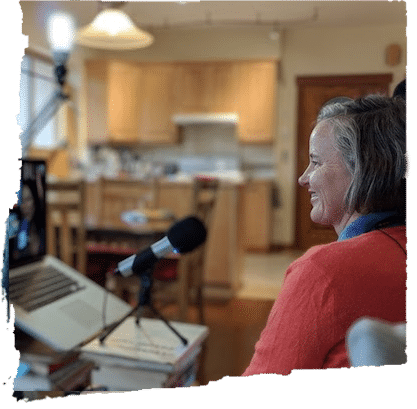
Online
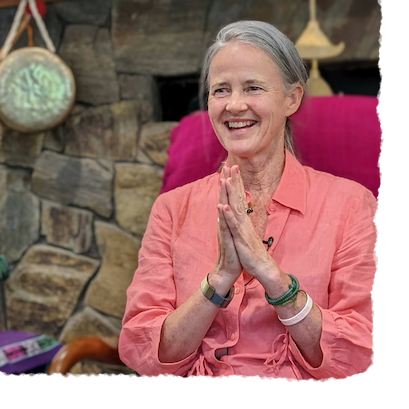
In-Person
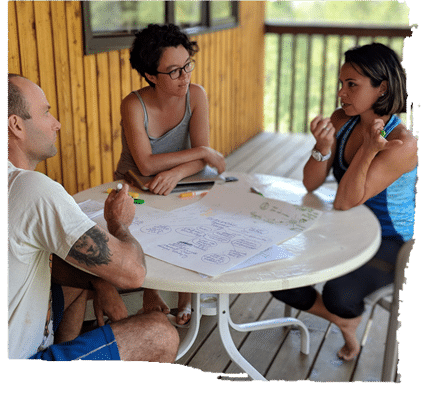
Library