
New Episodes!
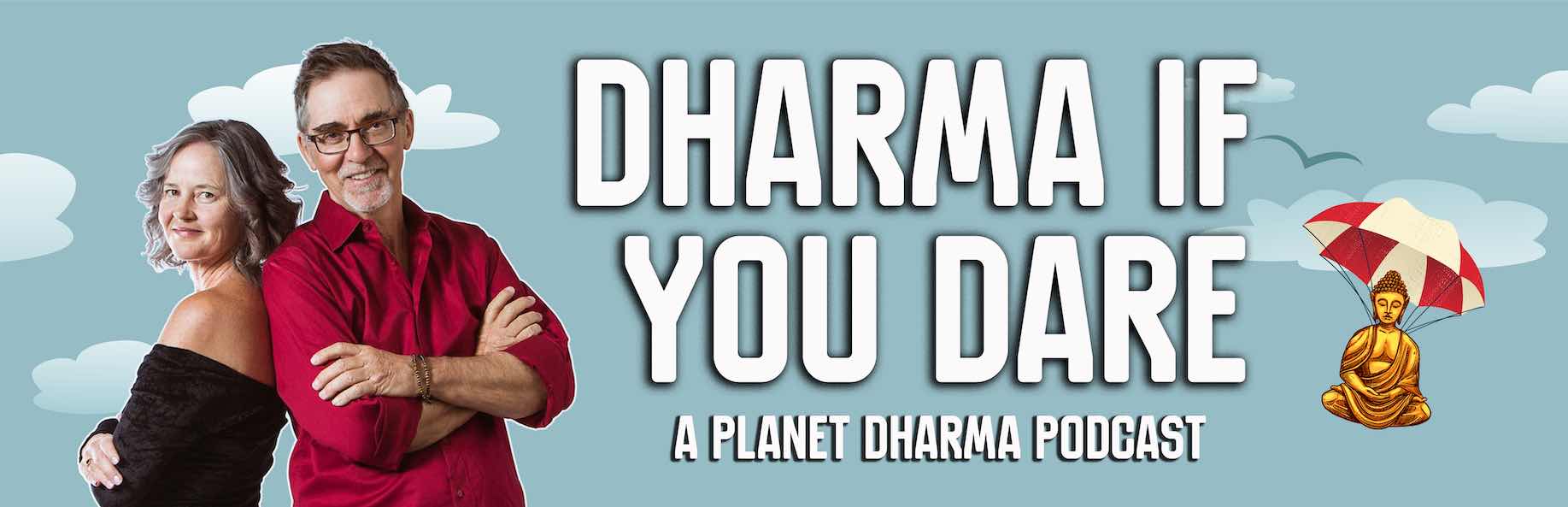
Dharma If You Dare Podcast
What does it take to live a life of meaning and compassion in our busy day-to-day lives? Tune in to get the knowledge and tools you need to help you tackle life’s biggest obstacles joyfully … if you dare! This journey explores shadow integration, spiritual awakening, and karma yoga to help you find balance and the courage to navigate life’s challenges with grace.
About Dharma If You Dare
A Planet Dharma Podcast
Dharma Teachers Doug Duncan and Catherine Pawasarat with to share with you the journey to a life of clarity and bliss. Join them on this podcast of excerpts of their live teachings. They share ancient wisdom updated to speak to the current and evolving paradigm of spiritual awakening in our modern age.
Why Listen to Dharma If You Dare?
Meet the Speakers
Dharma Teachers Qapel (Doug Duncan) and Sensei (Catherine Pawasarat) are spiritual mentors to students internationally and at their retreat center, Clear Sky, in BC, Canada. They are lineage holders in the Namgyal Lineage, both studying under the Venerable Namgyal Rinpoche and other teachers.
Having lived internationally for many years and traveled extensively, Qapel and Sensei draw on intercultural and trans-cultural experience to broaden the range and depth of their understandings of liberation that they share with others.
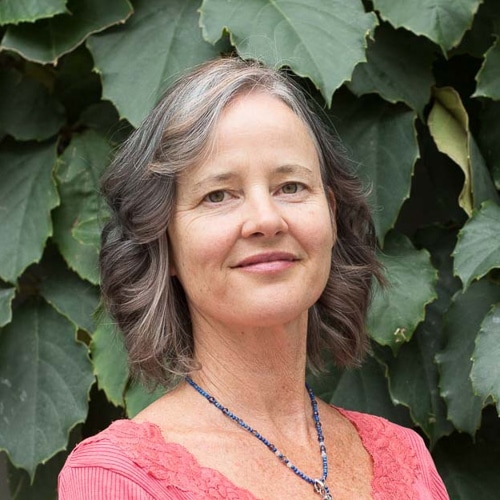
Catherine Sensei
Speaker
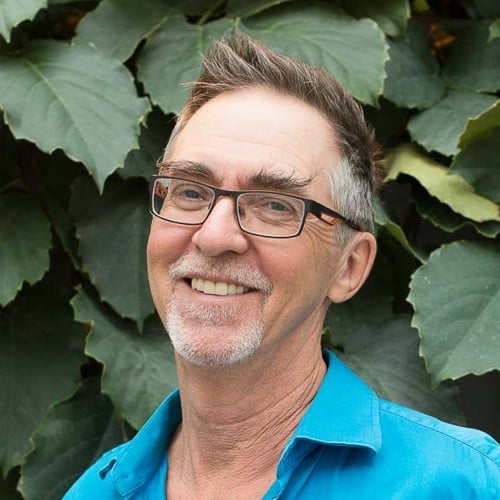
Qapel
Speaker
Dharma if you Dare podcast
Listen Now!
Subscribe to the podcast below on any of your favorite platforms.
The spiritual life and financial well-being [37:19]
Spirituality and economics: being vs having
In this podcast, Doug Duncan and Catherine Pawasarat are interviewed by Deborah Price, founder of the “The Money Coaching Institute” about their new book Wasteland to Pureland. Together they explore topics of spirituality and economics.
A big challenge for many spiritual seekers is maintaining our spiritual practice, while still living a life of economic well-being.
“People often get entrapped into “having” more and more as opposed to “being” more.” Deborah asks, “How do you recommend people move away from that and create a life more in keeping with “being” rather than “having”?
Take a listen to this podcast for the answer to this question and other magic wisdom.
You can find out more about the Wasteland to Pureland book at https://www.planetdharma.com/pureland
Finding your growth edge [12:52]
What`s your most challenging growth edge?
What sparks you? This lively, informal and interactive extract is from a class in our 2017 “Buddhas in Action” retreat at Clear Sky Retreat Center in B.C., Canada, with Achariya Doug Duncan, Catherine Pawasarat Sensei & some of the spiritual community (sangha).
How we use language to name our challenges is highly important and can reveal new insights. For example for someone who tends to take up a lot of space, instead of “I need to learn to fade into the background” a better way to name this would be “I aspire to let other people shine”. I.e. the growth edge is not so much about that person being “less” as supporting other people to show.
In this extract, students offer and share what are some challenging growth edges they have, and what are they most curious about / what most sparks them? Doug and Catherine Sensei offer live interactive teaching on ways to reframe and deepen these question.
Some topics that unfold during this session are “letting go into the chaos,” “running out of time,” my way is better,” “making mistakes,” “staying present in the body,” “engaging,” “looking at layers beneath states,” “learning with others,” “career” and “clinging.”
To register for our mailing list or to attend any upcoming events, please visit us at Planet Dharma. To register for the upcoming “Buddha`s in Action” Retreat for summer 2018, please visit us at https://www.planetdharma.com/event/retreat-buddhas-action/
Tips on becoming a “Buddha in action” [17:31]
Buddhas in Action: Karma Yoga
In this new Planet Dharma episode, Achariya Doug Duncan and Catherine Pawasarat Sensei shine light on the principle that “buddhas in action” (spiritual explorers waking up and growing through the path of selfless service) continually explore the question “What is this?”
During this in-depth talk from the “Buddha’s in Action Retreat 2017,” the teachers discuss the questions “What is yoga?” and specifically, “What is karma yoga?”
“Asking the question “what” drives you to awakening,” mention Achariya Doug Duncan & Catherine Pawasarat Sensei. “When it comes to meditation the self-referencing occurs in relationship to the arisings in the mind, or in the body; in karma yoga it arises in relationship to your task.” Karma yoga helps us to train ourselves to be mindful and aware of the states we are in while doing something and introducing the technology to change that state if it isn`t clear, wholesome, blissful, spacious & awake.
“As easily as you can get lost into the phenomena of your mind, you can get lost into the phenomena of your work.” The practice of karma yoga helps us not get lost, and instead brings awareness of body, speech and mind. This leads us into more compassion in our career and daily lives.
This talk was from the “Buddha’s in Action” Retreat 2017 at Clear Sky Retreat Center in B.C., Canada. To register for our mailing list or to attend any upcoming events, please visit us at Planet Dharma. To register for the upcoming “Buddha`s in Action” Retreat for summer 2018, please visit us at Planet Dharma Buddhas in Action retreat
Podcast Transcription:
[Qapel] Ask the question: what is this? What is this “self” I’m referencing to? What is this thing? What is it, where is it? How is it? Can I find it? You won’t find it by the way? Well, you can try. But we want you to look. So when it comes to meditation, the “self” referencing occurs in relationship to the arisings in the mind or in the body, and in karma yoga, it arises in relation to your task. So as easily as you can get lost in the phenomena of your mind, you can get lost into the phenomena of your work. And insofar as getting absorbed, you have those factors of concentration, calm and so on. That’s fine, right? But what you get where you get into trouble is when it gets interrupted and how you respond to the interruption. That’s when the self feels challenged.
And so when we do a karma yoga practice, we want to watch the nature of the disruptions and the disturbances and how that becomes pleasant or unpleasant based on some unknown measurement system. So we just look at the unknown measurement system and go “what is going on here?”
[Sensei] We just need to keep looking. Okay, so I want to be in control when I’m being silly. Well, that’s not really true. Like if you really think that okay, Peter, you can be in control all the time. That’s actually exhausting and that’s not very fun, right? And then it implies if you’re in control of yourself all the time, you kind of have to be in control of everybody else as well, which is even more exhausting.
[Qapel] So remember that one person that we’re trying to control perpetually and continuously and uninterruptedly that we never ever, ever, ever, ever could control is “mommy.” So the ego is born from the breast of the mommy separation and we’re always fighting that battle, always, with no chances of success because the echo is that which separates. So we’re trying to get, actually, what we’re trying to do in life is get back to unity. We’re trying to get back to the unitive of state, and we make the mistake of associating it with mother rather than with surrender into the transcendental which is the “big mother” in the sky, metaphorically speaking.
[Sensei] And the joy and the relaxation that’s available to us in that letting go.
[Qapel] Super cool. So when you’re practicing whether you like it, whether you don’t like it, whether you’re happy or sad (it sounds like a song: whether you’re glad or mad) what are you doing? Simply observing and letting it go. Okay – karma yoga.
[Sensei] Okay, so when we think of yoga, we usually think of hatha yoga, that’s the body, the body yoga and there’s at least six different kinds of yoga. Are there more? It depends who you’re referencing.
[Qapel] What measure measures. And just in case you don’t know yoga means to “yoke” like oxen, to join. Also, “hatha” is “sun-moon.” So you’re getting the idea is balancing the energy, sun energy, moon energy, so male and female energy.
[Sensei] So “yolk” is like the body and mind working together, right? That kind of yoke. Also the discipline. This is the cart I’m pulling, I guess. The ox is in front of the cart.
[Qapel] We hope. So there are six.
[Sensei] So bhakti yoga.
[Qapel] Love devotion.
[Sensei] This is devotion. It’s interesting – this one is not very popular in North America right now. Although every once in a while there’s these huge exceptions like Amma Ji. And westerners love to photograph bhakti yoga – like all those photos of people in Thailand offering flowers and incense at the shrine. That’s bhakti yoga. And so it’s important to note that those people give those offerings every day, probably several times a day, and that’s their discipline.
[Qapel] The root is “bha” which means to be, it’s also womb, “bhaga.” “Bhaga” means womb. So it’s a kind of the “being” yoga. I’m really in love with living.
[Sensei] Yeah. So that discipline of giving offerings, they’ve got all the same ups and downs that we do. I’m sure sometimes, you know, the monk at the temple pisses them off and they’re still giving their offerings. So just emphasizing the path aspect of that. So hatha yoga, everybody’s familiar with? Jnana yoga, that’s the path of scholarship.
[Qapel] From the root “jna,” to know. That’s how we get “jna”in English becomes knowledge, knowing the edges, knowledge. So it’s scholarship.
[Sensei] Isn’t it considered the most dangerous path?
[Qapel] Anyway “jna,” by the way, is the root for natal or birth. So remember, English is an Indo European language, so the connections are really quite pervasive. So Jnana is the knowing of birth, knowing how things arise and passed away. Sorry, what was your question?
[Sensei] Considered the most dangerous path? Dangerous in the sense that we can fool the mind, the mind is so tricky. So if we use the mind as a path and especially if it’s me and my books, right, I can go down some unwholesome wormholes by myself.
[Qapel] Somebody said that the person most susceptible to manipulation and being fooled is the educated person.
[Sensei] Right. Our mental acrobatics, like we get enamored with our own mental agility.
[Qapel] Subject to propaganda, that was it. The person most subject to propaganda is the educated person.
[Sensei] And that’s why in this path we have placed so much value on having a teacher is to prevent that from happening. The teachers like the, helps us to course-correct. Okay, then Dhyana yoga, that’s meditation.
[Qapel] “Dya” from foundation. So by Dya is, the root is “foundation of our being.” So “nja” again is birth, so Dyajna, the foundation of our being is meditative. There is no moment in life when you’re not meditating. Every moment is a meditation. Whether it’s focused meditation or not, well, that’s a different question.
[Sensei] And Karma yoga.
[Qapel] Karma yoga, that’s this one.
[Sensei] Which we’ll be talking about more.
[Qapel] And “kar’ is the root for activity, or a car, a vehicle. So “kar” becomes ”vehicle” in English, like “car.” And “ma” – “mum.” So “karma” is the vehicle that carries you forward. It’s a transport.
[Sensei] And then raja yoga includes all the other five.
[Qapel] And of course, “raja” means royal or king. Ronnie raja. And the root of that is “ra” and “ja.” So “ra” is birth, and “ja” is fire. So it’s the birth of fire, raja. So when they say raja, they’re talking about the totality of things, the energy body.
[Sensei] Yeah, and I’d say that everybody benefits from elements of all of them, for sure.
[Qapel] Which is why they’re six. You know, we’re multifaceted beings. So we need little platforms for each of these aspects of our being. So we have body, speech for communication and emotion, and mind (which is in the heart in the east) for understanding.
[Sensei] And then we’re gonna have personal predominances.
[Qapel] You betcha.
[Sensei] One thing that’s become apparent over the years since we’ve had a lot of students who were yoga students and just became excellent at hatha yoga and still felt that something was missing. So I guess maybe the stream they got into didn’t offer the others as part of the path maybe.
[Qapel] Mostly.
[Sensei] So they come you know, they’d say “I know there’s something missing – what is that?”
[Qapel] Curiously, that question is what drives your awakening. If you want to know what drives your awakening, it’s simply one word. “What.” “What, what, what, what.” That’s the word that drives the awakening? What is this? What’s going on? What’s happening? Why am I doing this? What’s this about? Who are you? That’s a “what.” “What, what, what. what, what, what.”
[Participant] What is an example of raja yoga?
[Qapel] Well, it’s a bit like this. You know tantric practice is an integration of all the seven meditations, all the classic seven meditations. It’s visualization, it’s the mantra, it’s movement, it’s breathing, it’s devotion, it’s whatever I’m missing, right? It’s all seven in one. So this is a raja yoga. As an example. Multitasking, insofar as anyone can multitask, is kind of raja yoga. Being able to get your passport out, handle your baggage, get through the security line, answer the questions, get your bags back, get money back in your pocket, get your plane and get your boarding pass – raja yoga.
[Sensei] Be nice.
[Qapel] Be nice to the person hassling you, and not start to get irritated by the guy behind you who’s yelling into a cell phone about his bad teeth or something. Alright karma yoga – spiritual path of action. It’s the path of action – doing, doing, doing. We are doers, we westerners are doers. So this is why we feel that karma yoga is the primordial, primary or principle path for the modern age. We’re doers. People don’t like sitting around so much except to watch movies which is “doing” at a different level, I guess.
[Sensei] And there’s practical exigencies also, exigencies, which is where most, most people work eight or nine hours a day? Right? So that can make it challenging to practice meditation as our central path for example. However, if karma yoga is your central path and it is possible to transform our day job into karma yoga.
[Qapel] Curiously enough, you’re not really transforming your day job into karma yoga, you’re transferring you, in your day job, into karma. The job is neutral, right? It’s like guns, the job is neutral. You’re transforming your attitude about what you do, your involvement in what you do from doing to meditating through doing.
[Sensei] And most people who are on the spiritual path are already doing this instinctively, right? We’re doing something that we love, we do something we’re passionate about that we believe in. And so this is what we’re doing is helping flesh this out so that it’s very much a practical spiritual path.
[Qapel] And one of the central things to awakening is a decision, it’s a decision. You make a decision to wake up. You’re born asleep, as it were, in the human condition. I know we think we’re awake but relatively we’re walking, we’re kind of sleepwalking through habitual programming of just what you get,right? It’s kind of the base model. But awakening is a decision, you make the decision that you’re going to wake up. And so karma, “kar,” activity, is a decision, so it means it’s intentional. So when we talk about mindfulness there’s kind of an assumed intention to be more mindful. But meditation is one step further. It’s mindful about being mindful, which is the next layer down or the next movement in. So the decision is really important. In Sanskrit, they say “cetanā,” will, or decision, equals karma. So your karma is your decision. And if you haven’t made the decision, then your karma is whatever results from the decision you didn’t make.
[Sensei] We don’t really identify what our path is, and then therefore it’s challenging for us to really work that path.
[Qapel] That’s a very important point.
[Sensei] So we’re highlighting this path because it’s basically what we see most people gravitating towards.
[Qapel] Look at, here you are, look at your life, your ….
[Sensei] So more power to you. So, with karma yoga, it’s really about how we do things, not about doing them, not about getting them done, not about results. This is one of my issues with the mindfulness for productivity movement that’s getting so strong. That’s kind of missing the point. It’s our state of awareness and our state of loving kindness and compassion as we do things. Which does lead to greater productivity, but if we put the productivity first, loving kindness and compassion don’t necessarily go with that.
[Qapel] So, one of the things about karma yoga training is that people tend to think it’s like volunteerism. I’m volunteering to help out, or I’m volunteering at my church, but that’s not really karma yoga. The purpose of karma yoga isn’t volunteerism, it’s about training yourself to be mindful and aware of the state you’re in while you’re doing something and introducing the technology to change that state if it isn’t clear, wholesome, blissful, spacious, and awake. Right? So people often do volunteerism with a certain kind of “holier than thou” attitude or resentment or kind of like, “I don’t have to do a good job because I’m not getting paid for it.” All of these are big mistakes when it comes to karma yoga. “I’m helping you” is kind of the first error of ego, right? No matter what you do, you’re helping each other and so you need to think that way. I’m helping myself by helping you and I’m helping you by helping you and you’re helping me by letting me help you, and so on. So, karma yoga is taking work, which you’re just doing, compress, getting it done, and creating the space to observe and watch and engage and how you’re getting it done, who you’re getting it done with, and so on. To give you the space to get some insight into how the ego basically leads you around in circles when in fact there is really no such ego to be found. All you’re going to find when you find the ego is the patterning of sleep. You’re not gonna find you, you’re gonna find the patterning of sleep. Huh? Yeah.
[Closing] If this podcast resonated with you, we welcome you to visit www.planetdharma.com to explore more teachings and resources to support our ongoing work and future podcast visit www.planetdharma.com/generosity.
Healing the Splits Within [4:50]
How do we heal the splits within? In this 5 minute podcast episode, Achariya Doug Duncan and Catherine Pawasarat Sensei elaborate on this question. They share that complete or wholesome effort is when we are in the moment and not distracted by conflicting emotions or primitive thinking. “The more wholesome we are, the more complete our effort is. It is this wholesomeness in conjunction with our experience that heals the splits within.”
This talk was from “Right Effort – Healing the Splits Within”, a webinar series offered by Planet Dharma in 2017, as part of the “Year of Victory” study program. To find out more about Planet Dharma’s teachings and programs please visit us at Planet Dharma.
A vision bigger than your lifetime [10:25]
Study nature and consciousness to inform your vision and career
Catherine Sensei begins this episode explaining, “The natural cycles of nature are in essence the same as the natural cycles of dharma, karma and consciousness.” There’s a natural wisdom and compassion we can access both studying nature and studying consciousness. Doug and Catherine Sensei discuss that society`s number one function is “to free people to explore.” However, because of our busy lives and our clinging to security, very few people take the time to map out and study how their mind works, how their consciousness works. “ Our ego looks for security which leads us into anxiety and missing the wonder. “You need a vision bigger than your lifetime and bigger than yourself. Otherwise the ego will always feel insecure”, Doug and Catherine explain.
This excerpt was taken from the “Right Effort – Career and Creativity” talk, session 1 from the “Year of Victory” classes 2017, at Clear Sky Retreat Center in B.C., Canada. To register for our mailing list visit us at www.planetdharma.com
Our “Body of Truth” creative visualization retreats are an excellent way to spend focused time studying the interplay of nature and consciousness. See https://www.planetdharma.com/events/category/retreats/ to see our upcoming schedule.
Podcast Transcription:
Catherine Sensei: So we need awareness about natural cycles of nature which are in essence the same as the natural cycles of dharma, of karma and of consciousness. So we’re just paying attention.
Qapel: Exactly. And to do this, we need to understand how things work. So we need to understand how nature works. We need to understand how consciousness works. In order to understand how consciousness works, your primary lab or testing ground is your own mind. And the problem with society is that so much energy is going into trivia, so much energy is going into consumption, that very few people can take the time out, or very few people do take the time out, to actually map and study how their mind works and how their consciousness works. Because if you are studying how your consciousness works, you’re also studying nature – because your mind is part of nature.
So if we want to understand a bumblebee, we need to understand our mind. And if we want to understand our mind we can understand a bumblebee. So nature and consciousness are the same thing in the end. So Catherine, when we understand these cycles better, what can we do?
CS: We are better able to judge what is compassionate.
Q: That’s really, really important. You can’t really decide whether something is compassionate or not if it’s driven by ego greed and ego attachment and consumption. It’s very hard to tell what’s compassionate if the group consciousness is operating out of attachment and clinging.
CS: So if we know that beings turn towards the light, in the sense of seeking goodness, then of course we naturally want to provide that and do provide that. We don’t understand that beings turn towards the light and then give them shade. That wouldn’t make any sense and that would be more effort for less beauty.
Q: So let’s flip it. When we understand all the forces at work, when we understand nature, when we understand consciousness, when we understand how things connect to each other, we automatically pick the best choice. It’s automatic. It’s also the most compassionate. Automatically we pick the best choice that is the most compassionate. It’s also the least effort. It’s automatic.
CS: Because it’s in line with natural laws.
Q: Even though the ego may not like it. The ego may want the third beer, but the consciousness goes, “No, a glass is good”. So when we say the ego doesn’t like it, it doesn’t mean that it’s unwholesome. It means that the ego is rooted or stuck in its patternings of attachment and clinging – to basically pacify itself. That’s what the ego always does. In short, the ego takes a lot of effort that it doesn’t need to exert for most things because the ego’s job is basically, 1) to make distinctions and choices from options, having studied nature to see what is the most effective result. So the most beautiful is the transcendental. So the ego won’t choose the transcendental. And the reason the ego won’t choose the transcendental is the transcendental does not need the ego there for its operation.
CS: Transcendental is trans ego.
Q: The ego is redundant from the transcendental point of view. It becomes a slave rather than a master. So the master is the transcendental state, the ego becomes the worker, the hired hand, the employee if you will, and it doesn’t like that idea.
CS: But has really good working and living conditions.
Q: Oh yes. Fantastic. That’s the biggest, the best. The ego really gets to shine if it comes from a transcendental point of view and the ego never shines enough if it comes from an ego point of view.
And again, that’s another reason why it’s called the most beautiful for the least effort. It’s not the biggest house, not the most money, not the best partner, not the biggest career. These are ego substitutes that eventually fall flat sooner or later.
CS: So the ego has an inherent knowing that it is not necessary for the transcendental and therefore it feels insecure, inherently insecure, and that’s why it’s always trying to shore itself up. And these things that Qapel just mentioned are all things that the ego tries to grab on to try to shore itself up, which makes sense, right? “I’ll be a bigger and better ego and then and then I’ll be more secure”. So that’s the more money, the superlative partner, the bigger house etcetera.
Q: Just to repeat that statement and maybe in other words: not only does the ego want freedom, but it also wants security. And this security is the root of anxiety and the hallmark of the ego. Security. There is only one security for the ego, and that is not dying. If the ego could live forever, it would. But the ego is impermanent, It goes with your death.
CS: Yes, and that’s why a human being really needs something bigger than itself, bigger than the ego, and bigger than our private lives to get into. Because no matter what I do in this lifetime, it’s over when I die.
Q: To put it another way: insecurity is fundamentally a lack of purpose. You don’t know what you’re doing, you’re just going through the paces. Mhm? So you need a purpose and you need a purpose bigger than you. It’s not enough purpose for a life to just be focused on itself because you’re a tribal member, you’re a social animal. Your purpose has to include some vision bigger than your lifetime and bigger than yourself. Otherwise, the ego will always feel insecure. This is why we have such a hard time with divorces or with children not turning out the way we want them to turn out. Or they want us to be. It’s all rooted in insecurity that we need everybody doing what we are doing, to feel secure. And nobody does what anybody else wants them to do really in the end, Right?
CS: I don’t even do what I want myself to do.
Q: Yeah, exactly. I don’t even live up to my own expectations. Private life alone is not big enough. And the only way you can fool yourself into thinking private life is big enough is by being busy, so busy that as you approach old age, you don’t realize or are shocked by the fact that everybody starts ignoring you, that you’re no longer relevant. And then all of a sudden you’re faced in your old age with being alone because you’re not a player anymore. So you need to be clear about your security. The only security there is is the transcendental state – Illness, cancer, death can’t take that away.
What is big enough? Exploration, discovery, dedication to the development of individuals in your community, creating wholesome positive human-based businesses and industries that speak to the welfare of people. It’s quite simple. if you don’t have a job like that or you don’t have a career like that, go get into one that does that kind of stuff. You’ll feel better.
CS: Or do that in your existing work. (Q: Exactly) Alleviating suffering and benefiting beings.
Q: That’s a noble purpose. You can do it through engineering, you can do it through medicine, you can do it through administration, you can do it through bookkeeping or accounting. Even accounting!!
CS: You can do it through anything.
Q: Let’s be clear though: Society has one function, one obligation and that’s to free people to explore.
Perfect Generosity [4:02]
Perfect generosity and all the paramis follow
In this podcast, Achariya Doug Duncan and Catherine Pawasarat Sensei expand on the six perfections (Paramis) of Generosity, Discipline, Acceptance, Effort, Concentration, Insight and share “If you can perfect generosity, all the rest will follow.” When we do not apply these principles, we move into unnecessary suffering. Achariya Doug states, “If you`re not doing it for yourself, the teacher can talk about it until the cows come home home and it won`t make particularly much difference in your life because its not being applied.” However, when applying these principles in our everyday lives unnecessary suffering cannot arise.
“These Paramis are precious and awesome,” says Catherine Sensei, “to the point where we teach a course on it called “Becoming a Work of Art.”
This excerpt was taken from the “Right Effort – Healing the Splits Within” series given as part of the “Year of Victory” program in 2017, and recorded at Clear Sky Retreat Center in B.C., Canada. To register for our mailing list or to attend any upcoming events, please visit us at www.planetdharma.com
Basic Trust in the Universe
Spiritual awakening requires becoming aware of the ego structure
The first step in spiritual awakening is becoming aware of our ego structure — actually perceiving the particular beliefs and images that we have identified with and taken to be true — then dissolving that, letting go of that part of one’s identity.
Extended paraphrase:
The ego is a psychic structure that is based on crystallized beliefs about who we are and what the world is. We experience ourselves and the world through the filter of this structure. Spiritual awakening involves connecting with those dimensions of experience obscured by ego structure.
The first step is becoming aware — actually perceiving the particular beliefs and images that we have identified with and taken to be true — then dissolving that facet of the ego structure. This means letting go of part of one’s identity, which can be painful or frightening because the old sense of your identity crumbles and you don’t know what will take its place. Letting go of what has felt real feels like jumping into an abyss.
The jumping can be easy or difficult depending on the presence of “basic trust” — the sense that whatever happens will ultimately be fine. The ego’s perspective arises out of a lack of this trust. It is based on distrust, paranoia, and fear that the universe will not take care of you in the ways that you need. Basic trust is the confidence that the universe and human nature are fundamentally good and loving, and that life is fundamentally benevolent. It will help you take that plunge.
You don’t need assurances that things are going to be okay because you implicitly know things are going to be okay. Basic trust gives you the capacity and willingness to let go of the identifications, beliefs, and concepts — remnants of the past — that make up the ego.
If you don’t have basic trust, you will react to what arises in accordance with your conditioning and will want things to go one way or another, rather than to just be, without reacting, which is allowing the ego to die. The more that basic trust is present, the more smoothly the process of realization and transformation can proceed.
If we lack basic trust, it is important to develop it. With basic trust, our lives have a sense of freedom. The desire to know where things are going arises out of simple curiosity rather than a desire to control the unfoldment. Tension and stress from constantly struggling and fighting with our reality become relaxed into a sense of peace that allows a spontaneous and natural unfoldment of one’s being. A new outlook emerges, allowing us to see that whatever happens is right even if it’s painful. Things that we had thought were bad turned out not to be bad.
Doug Sensei teaches on the enneagram, drawing from this source:
Facets of Unity: The Enneagram of Holy Ideas by A.H. Almaas, 1998; Chapter 4, Basic Trust
Search Inside:
https://books.google.com/books/about/Facets_of_Unity.html?id=gdTz5Mt0WtgC&redir_esc=y
Podcast Transcription:
From the point of view of basic trust, the universe will work out. Something will happen. You might end up as a bum under the Trevi fountain or you may end up the king of France- does it really matter from the point of view of transcendence? Not a bit. And since you live your life in such a way that you naturally jump into the abyss without even conceptualizing that you’ll be okay. You have to be very clear, you can’t care. For freedom in your being, for freedom in your being – never mind freedom in the world- for freedom in your being, you can’t actually care if you die tomorrow. Because if you die tomorrow, well, then we’ll see what happens then. Maybe nothing happens then, in which case it won’t be a problem. Or if something happens then it will be, well, it’ll be different.
I guess the selling point for this whole argument is that it’s going to happen anyway. So why freak out about it if it happens tomorrow? My brother, I’m sure, did not know that he was gonna have a stroke yesterday – 65 years old, walking along, retired, thinking, well maybe I’ll run for politics. But then, you know, you get a stroke and then your head, you’re all of a sudden your life is hanging by a thread, right, who knows? And it can happen when you’re 20, you could be in that plane going from Boston to L. A. – or wherever it was headed- and find yourself going into the Twin Towers, you don’t know. So given the fact that you don’t know, anything could happen at any time, don’t you think It’s just better to be really happy about it?
You know, there’s a law of thermodynamics, right? Like energy can neither be created nor destroyed. It only changes its form and fundamentally you are a form, you are energy embodied in a form. And this form is as impermanent and as insubstantial as a dandelion spore in the wind. So what are you worried about? Your life is already a mess. It’ll be equally a mess 20 years from now. It won’t be any more together when you’re 80 than it was when you are when you’re 60. And it’s not any more together when it’s 60 than 20. The only thing that’s changed in all that time is you’re not worried about it anymore. All right, then let’s go one step further. Trust that the ego’s unity with his experience is available to you now, and then you manifest the forms.
So this basic trust is huge, huge, huge. Without it, you’re not gonna be able to let go of your angiogram type unless you trust the universe more than you trust yourself. Unless you trust the universe more than you trust your senses more than you trust your feelings, and more than you trust your thoughts or you’re thinking of your concepts. It’s got to be bigger than that. So the initial step in the process of the transformation of any sector of the ego is this basic trust. The step is only completed by giving up the particular structure that we’ve been holding onto. What is it that you are holding on to? And I don’t mean like your job. I mean, what is it in-depth that you’re hanging on to? Your image? The curious thing about it is if you can surrender that, then you’re quite capable of just being.
It’s not so much that the old dies, as it is that the clinging to it dies. And that allows a realization to occur that you don’t have to fight anymore for anything in your life. You don’t have to struggle. You no longer need to struggle. You have to trust that the universe is okay and that what comes your way will and what doesn’t want. That doesn’t mean from an ego level that you don’t have to go to work, right? Because you’re paying Caesar what’s caesar’s, but you don’t have to struggle about it anymore. So what if you don’t like your job and quit? Well, then what am I gonna do? I don’t know, do something else. Well, then I might have to give up my apartment. Well then don’t quit and continue to struggle, but you can’t have it both ways.
For more information. Please visit clear Sky center dot org. That’s C l e A R S K Y C E N T E R dot org.
The Next Step of Unfoldment
In order for you to move to your next understanding — the next stage of unfoldment — how you position yourself in relationship to your world has to change.
—
Spiritual unfoldment talk transcript:
“The important message that I want to convey tonight is: for you to move to your next understanding, your basic position about how you position yourself in relationship to your world has to go, has to change…in order for you to make the next step of unfoldment. It can’t go to the next level. And if you watch teachers, they do it throughout their lives.
I watched it with my teacher. He reinvented himself, not in terms of just giving classes — that’s what he did, that was his job – but in the way he imaged himself. Every decade it would go through a whole new turn — a whole new person there if you had the eyes to see it. Outwardly it didn’t look all that different. But he went from a stern Theravadin into a yahoo-ey Vajrayana to an interesting epicure, connoisseur-y, renaissance-y kind of guy, to the gentle, relatively gentle, old man. But with each change, the appearance changed. So if you look at the pictures of my teacher through the ages it almost looks like 15 different people, even though my experience of him, and I knew him for 30 years… he in some ways struck my ego as kind of the same. But if you look the pictures of him over time: completely different personic imagings.
So, for you, (fill in your name), to make the next step in your spiritual unfoldment, unless you’ve already done it just recently, [you need a] complete shift and change in the environment. Why not? If someone else did it, it would be okay, right? ‘But not me.’ That’s the point. Not that you have to do that, but why is it that you can’t?”
The talk was originally given on Oct. 19, 2009, in Kyoto, Japan.
Doug Sensei’s teacher was the great Canadian Lama, Namgyal Rinpoche.
The Next Step of Unfoldment
In order for you to move to your next understanding — the next stage of unfoldment — how you position yourself in relationship to your world has to change.
—
Spiritual unfoldment talk transcript:
“The important message that I want to convey tonight is: in order for you to move to your next understanding, your basic position about how you position yourself in relationship to your world has to go, has to change…in order for you to make the next step of unfoldment. It can’t not go to the next level. And if you watch teachers, they do it throughout their lives.
I watched it with my teacher. He reinvented himself, not in terms of just giving classes — that’s what he did, that was his job — but in the way he imaged himself. Every decade it would go through a whole new turn — a whole new person there if you had the eyes to see it. Outwardly it didn’t look all that different. But he went from a stern Theravadin into a yahoo-ey Vajrayana to kind of an interesting epicure, connoisseur-y, renaissance-y kind of guy, to the gentle, relatively gentle, old man. But with each change the appearance changed. So if you look at the pictures of my teacher through the ages it almost looks like 15 different people, even though my experience of him, and I knew him for 30 years… he in some ways struck my ego as kind of the same. But if you look the pictures of him over time: completely different personic imagings.
So, for you, (fill in your name), for you to make the next step in your spiritual unfoldment, unless you’ve already done it just recently, [you need a] complete shift and change in the environment. Why not? If someone else did it, it would be okay, right? ‘But not me.’ That’s the point. Not that you have to do that, but why is it that you can’t?”
Talk originally given on Oct. 19, 2009 in Kyoto, Japan.
Doug Sensei’s teacher was the great Canadian lama, Namgyal Rinpoche.
Follow Us on:
Stay Connected to Get The Latest Podcast Alerts & More
New Episodes Every Friday
More than 80 episodes and growing!
Wake Up: Four Paths to Spiritual Awakening
Embark on the path to waking up – take our free online course:
Want to Hear Us Speak Live?
Support the Work of Planet Dharma
Become a ‘Daring’ Podcast Patron
Micro-patrons get access to bonus resources and exclusive podcast episodes. Learn more by visiting our Patreon page.
You can also support our work by practicing generosity and offering dāna here.
Frequently Asked Questions
What topics does this podcast cover?
The Dharma If You Dare podcast explores topics like spiritual awakening, meditation retreats, shadow integration, karma yoga, tantra and deity practice, Eastern and Western approaches to enlightenment, and timeless teachings such as the Diamond Sutra.
Who is this podcast for?
This podcast is ideal for anyone on a path of personal growth and spiritual discovery—and who has the desire for awakening in this lifetime. Whether you’re a beginner seeking guidance or a seasoned practitioner looking for deeper insights, the content is designed to meet you where you are.
How can I subscribe?
You can listen and subscribe to the podcast on major platforms, including Spotify, Apple Podcasts, Podbean, and more. Simply search for “Dharma If You Dare” and hit subscribe to stay updated.
Are the teachings religious?
No. The teachings are universal and designed to help anyone, regardless of their religious background, to cultivate mindfulness, compassion, and self-awareness.
What is karma, and how does it relate to the podcast?
Karma is the principle of cause and effect. One theme of the podcast is delving into how understanding karma can transform your actions, relationships, and overall life experience.
Online
In-Person
Library